
Choosing a first violin is harder than it looks. Prices range from under $100 to several thousand dollars, sizing charts can be confusing, and it's easy to mistake a poorly set up instrument for a "bad" one. This guide breaks down what actually matters when buying a beginner violin: budget, size, setup quality, and what to buy alongside the instrument itself.
Best Beginner Violins by Budget
The right beginner violin depends less on brand name and more on setup quality and size. At Shar Music, the Franz Hoffmann® line covers most beginner needs, from a first-year student violin to a step-up instrument for a player who is outgrowing the basics. Every Franz Hoffmann® instrument is finished and adjusted at Shar Music's Ann Arbor workshop before it ships, which matters more than it sounds. A violin with a poorly cut bridge or an unglued seam will fight a beginner at every turn, no matter how nice the wood looks in photos.
| Tier | Example | Best For |
|---|---|---|
| Entry-level | Franz Hoffmann® Amadeus | Classroom orchestra, first-year students, cautious first purchase |
| Step-up | Franz Hoffmann® Prelude | Students moving past a basic entry-level violin who want more tone and resonance |
| Near-intermediate | Franz Hoffmann® Concert | Advancing players ready for more projection and tonal complexity |
Shar Music also carries Carlo Lamberti and John Cheng violins for players who want to compare options outside the Franz Hoffmann® line. The common thread across all of them is a proper setup: correct bridge height, a soundpost placed where it belongs, and strings that hold their pitch. That is what actually separates a violin a beginner can learn on from one that quietly discourages them.
Beginner Violin Price Ranges: What You Actually Get
Beginner violin pricing breaks down roughly into three tiers. Instruments priced very low often skip individual setup, which means the bridge, soundpost, and strings may need work before the violin is playable. In the $300 to $500 range, shoppers can find complete outfits with more dependable setup and accessories, although quality varies considerably between sellers. Spending closer to $500 and above can give you access to better-finished instruments, more refined tone, more dependable pegs and tuning, and stronger support, depending on the instrument and seller.
First-year costs add up beyond the sticker price. A realistic beginner budget includes the violin outfit itself, a shoulder rest, rosin, a spare set of strings, a tuner or tuning app, and occasional adjustments like restringing. For a child who is likely to outgrow two or three sizes before reaching full size, renting is usually the more cost-effective route. Shar Music offers two paths here: MI Rentals, available to Michigan residents, which includes free insurance against theft or damage, and SharWay, a nationwide rent-to-own program that builds equity toward a purchase but does not include free insurance. Adults and anyone committed to sticking with the instrument long-term are usually better served by buying outright, since they will not need to size up.
Choosing the Correct Violin Size
Violin sizes run from 4/4 (full size) down through 3/4, 1/2, 1/4, 1/8, 1/10, and smaller, based primarily on arm length rather than age or height alone. Shar Music's instrument size and age chart gives a starting estimate, but the final call should come from actually holding the instrument, ideally with a teacher confirming the fit.
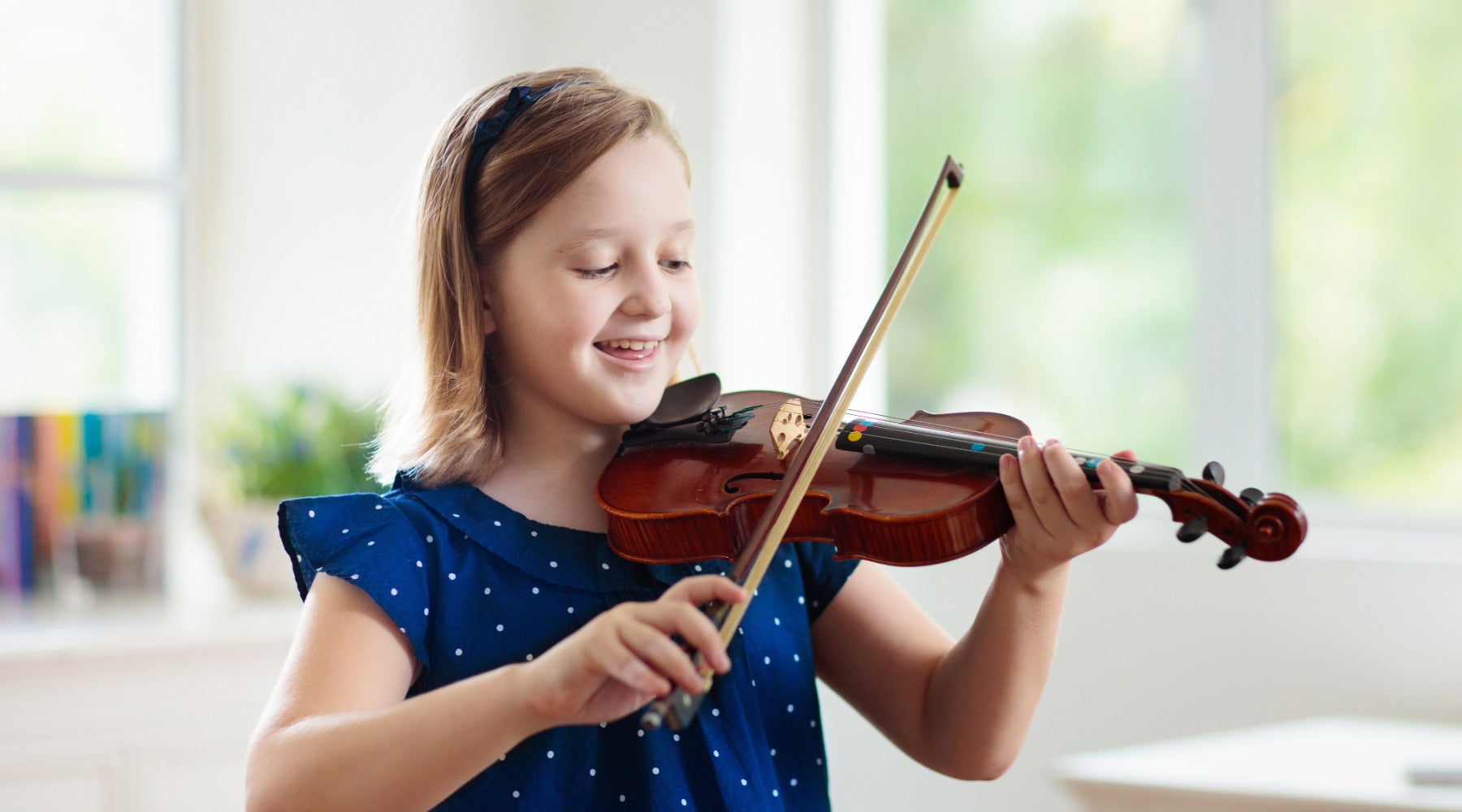
Sizing up "so it lasts longer" is one of the most common mistakes parents make. An oversized violin forces a tense arm position, makes it harder to press strings cleanly, and often gets blamed on the student's lack of talent when the real problem is the instrument. Adult beginners typically start on a full-size 4/4 violin, though smaller-framed adults sometimes do better on a 7/8 or 3/4 size. For left-handed beginners, most teachers still recommend starting with the standard right-hand bow hold unless there is a physical limitation, since it keeps orchestra seating, teaching materials, and resale options open.
What Makes a Beginner Violin Easy to Learn On
Setup quality is the difference between a violin that helps a beginner improve and one that fights them. A handful of concrete things to check:
- The bridge stands straight, is not warped, and sits at the correct height for the strings
- The pegs turn smoothly and actually hold their tuning
- The soundpost has been professionally positioned and adjusted
- Any fine tuners present are installed and functioning properly
- The fingerboard is flat with no dips or ridges
- The strings are fresh and not a bargain-bin string set that will not hold pitch
A quick sound and feel check goes a long way too. Open strings should sound relatively even and balanced, the instrument should not go noticeably out of tune within a few minutes of tuning it, and the bow should draw a steady, non-scratchy sound across all four strings. Beginners often assume a squeaky or unstable sound reflects their own lack of skill, when it is frequently a setup problem. Having a teacher, shop technician, or experienced player look over the instrument before buying, or shortly after it arrives, catches most of these issues early.
Outfit vs. Instrument Only: Accessories and Buying Risks
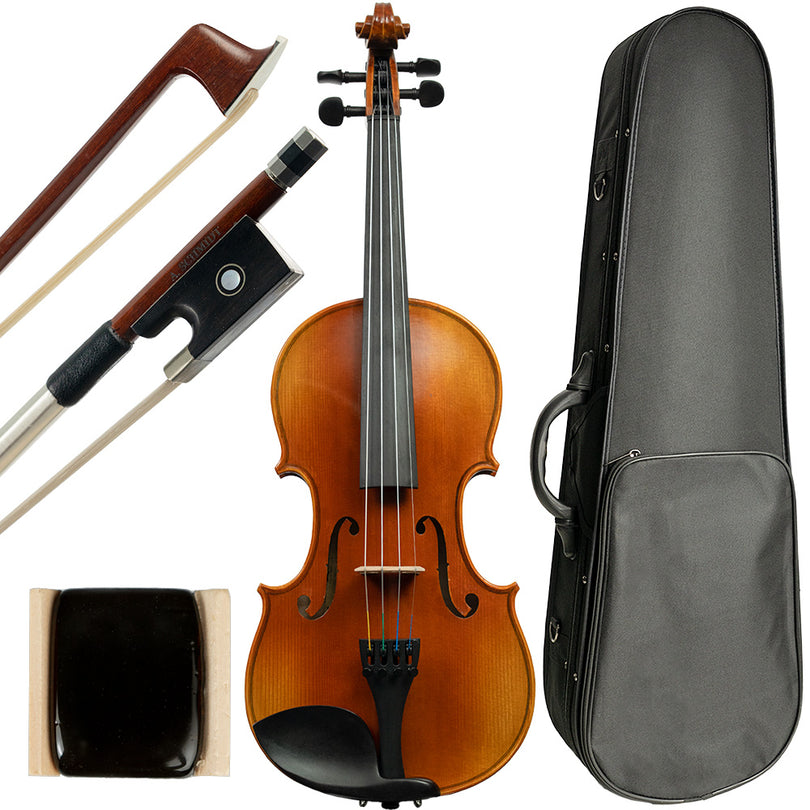
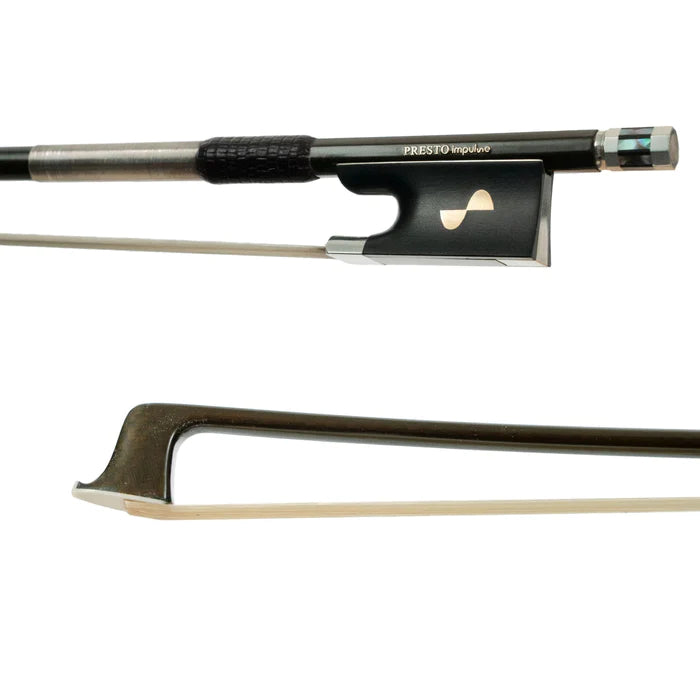
A violin "outfit" includes the violin, bow, case, and rosin, which covers what most beginners need to start playing on day one. "Instrument only" makes sense for someone who already owns a bow and case or wants to choose those pieces separately. Beyond the outfit basics, a shoulder rest and a tuner or tuning app matter early on; a music stand, humidifier, and cleaning cloth can be added later as needed.
Buying online carries some real risk if a listing is not transparent. Watch for prices that seem far too low for a complete outfit, no mention of individual setup or adjustment, vague or generic reviews, and no clear return or warranty policy. Franz Hoffmann® instruments come with a 30-day satisfaction guarantee and a 1-year limited warranty, which is worth comparing against any listing that offers neither. If budget allows and there is uncertainty about committing, Shar Music's in-home trial program lets a player try an instrument at home before buying, for a fee. Most students move from an entry-level violin to a step-up or intermediate instrument somewhere between one and three years in, once a teacher notices the current instrument is limiting tone or technique rather than the player.
Getting Started
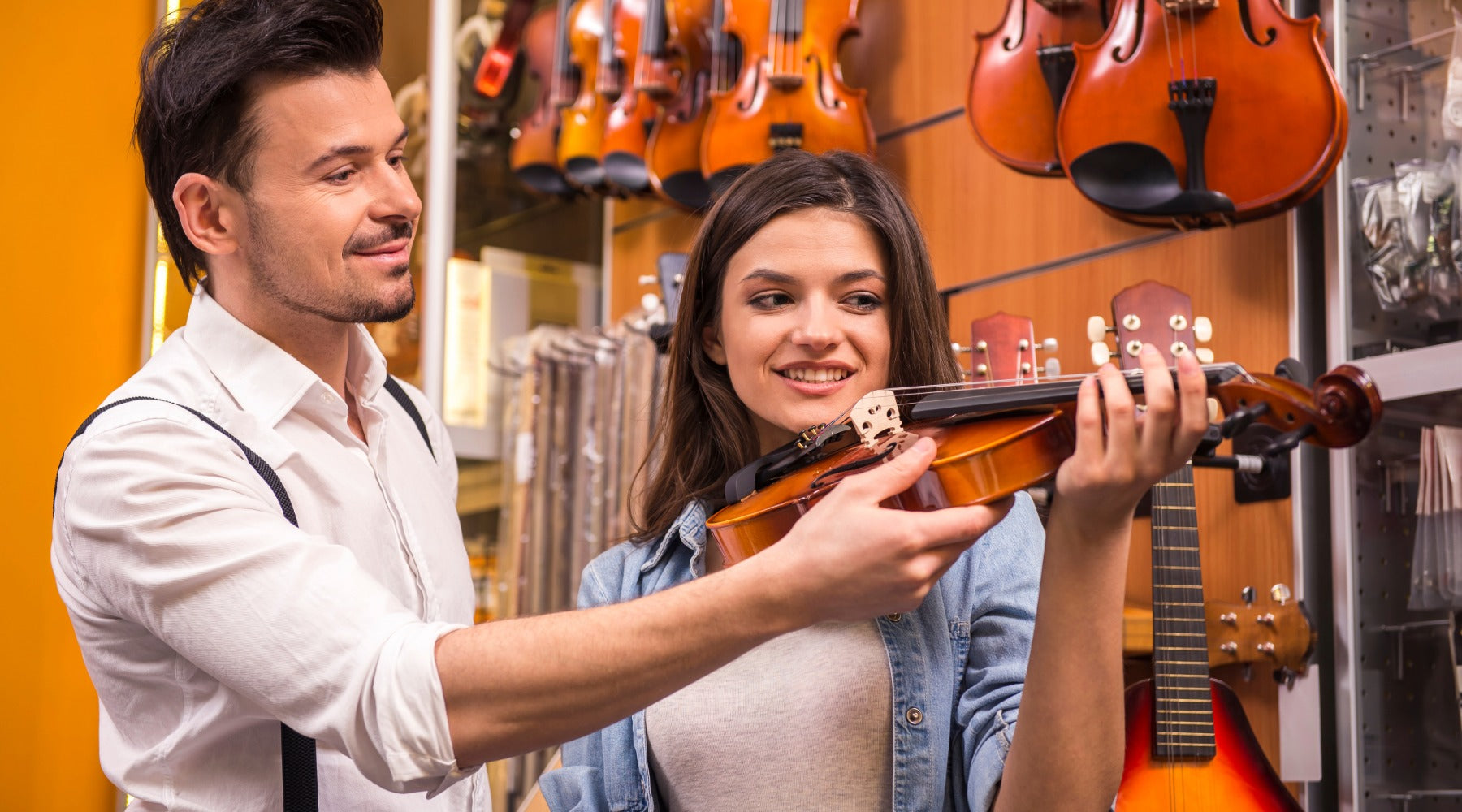
The best beginner violin is not the cheapest one. It is a properly sized, properly set up student violin backed by a clear budget and real after-sales support. Parents should start by confirming size and deciding between renting and buying. Adult beginners should prioritize a full-size instrument from a reliable line with an easy return policy. Anyone shopping online should check setup quality, warranty terms, and return windows before checking out. From here, a good next step is checking Shar Music's instrument size chart, comparing the Franz Hoffmann® lineup, or reaching out to a teacher or local shop for a hands-on try-out.
FAQ
How much should a beginner spend on a first violin?
A complete beginner outfit in the $300 to $500 range typically includes dependable setup and accessories, though quality varies between sellers. Instruments priced well under that often skip individual setup and may need adjustment before they are playable.
Is it better to rent or buy a violin for a beginner?
Renting usually makes more sense for children who will need to size up every year or two. Buying tends to make more sense for adults or anyone committed to sticking with the instrument long-term, since they will not outgrow it.
What violin size should a child or adult beginner choose?
Sizing is based mainly on arm length, not age alone. Most adults use a full-size 4/4 violin, though smaller-framed adults sometimes do better on a 7/8 or 3/4. A size chart is a good starting point, but a teacher should confirm the final fit.
Are cheap violins under $150 worth buying for beginners?
Instruments in that range often lack individual setup, which can mean a poorly positioned bridge, an unadjusted soundpost, or low-quality strings that will not hold pitch. That does not make every low-cost violin unusable, but it does mean it is worth having someone knowledgeable check it over before relying on it for lessons.
What accessories does a beginner violinist need on the first day?
A bow, case, and rosin usually come with a violin outfit. Beyond that, a shoulder rest and a tuner or tuning app matter right away. A music stand and cleaning supplies can be added later.
How can I tell if a beginner violin is properly set up?
Check that the bridge stands straight at the correct height, the pegs hold tuning, the soundpost has been professionally positioned and adjusted, and the fingerboard is flat. A quick playing test helps too: open strings should sound even, the instrument should hold its tuning for more than a few minutes, and the bow should not produce a scratchy or unstable sound.
When should a beginner upgrade to an intermediate violin?
Most students move up somewhere between one and three years into playing, once a teacher notices the current instrument is holding back tone or technique rather than the player's skill.