

If you're left-handed and thinking about learning the violin, you've probably wondered whether you need a special instrument. Left-handed violins do exist, and left-handed people also learn successfully on standard violins. In this guide, we explain the differences, compare practical considerations and offer a checklist for discussing the choice with a teacher.
Do Left-Handed Violins Exist?
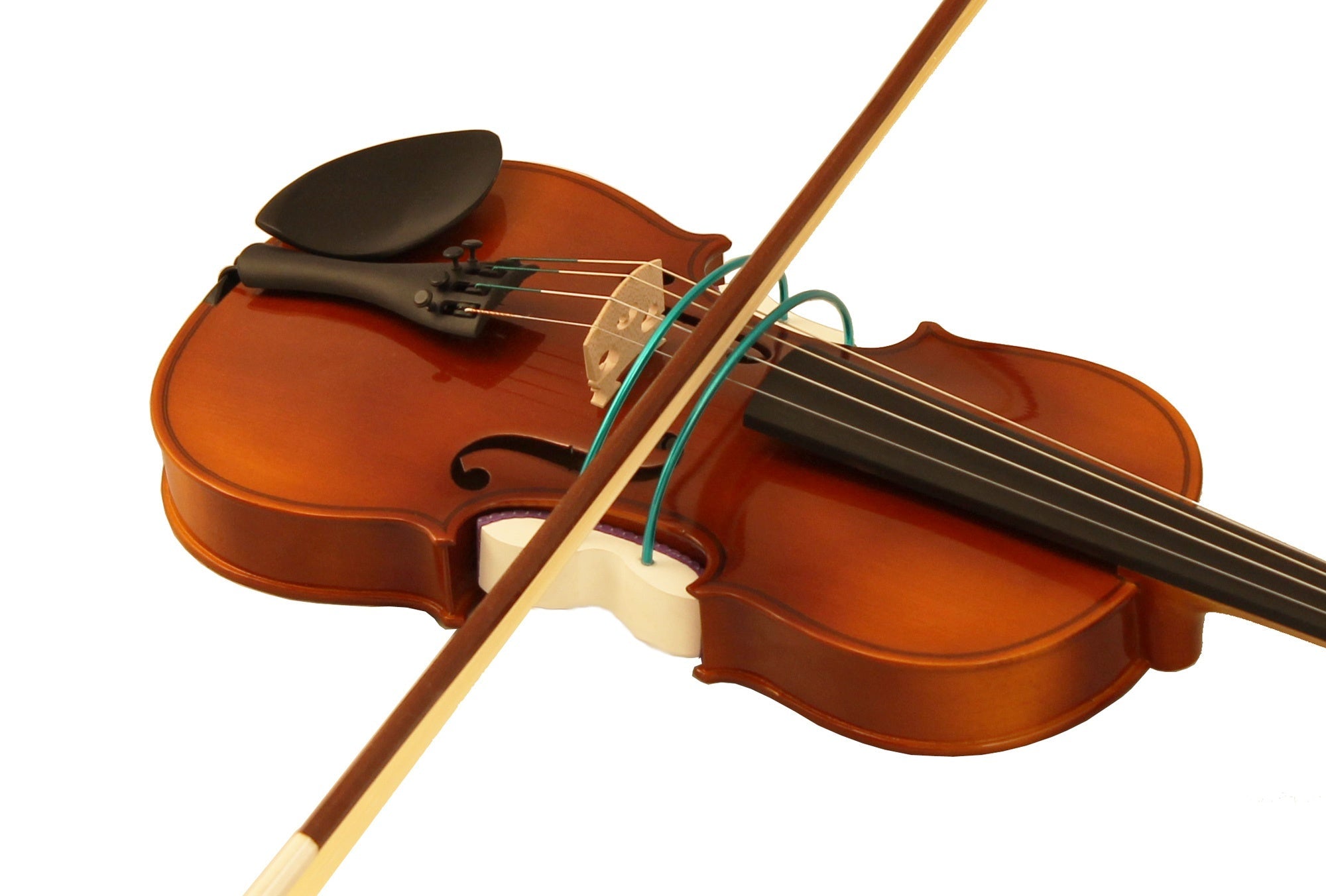
Yes. Left-handed models are less widely available, but some makers offer them as catalog instruments as well as custom orders. A purpose-built acoustic left-handed violin mirrors the usual playing arrangement: the instrument rests on the right shoulder, the right hand fingers the strings and the left hand bows.
Mirroring a violin involves more than flipping the string order. Several internal and external parts are built for a specific side:
- String order: The arrangement of G, D, A and E is mirrored relative to a standard violin so the playing relationships are reversed. The strings retain their usual pitches, G3, D4, A4 and E5.
- Bass bar: This wooden brace is glued inside the top under the bass-side bridge foot. A mirrored acoustic design places it on the corresponding opposite side.
- Soundpost: This fitted wooden post stands between the top and back near the treble-side bridge foot. Its position and fit must suit the reversed acoustic setup.
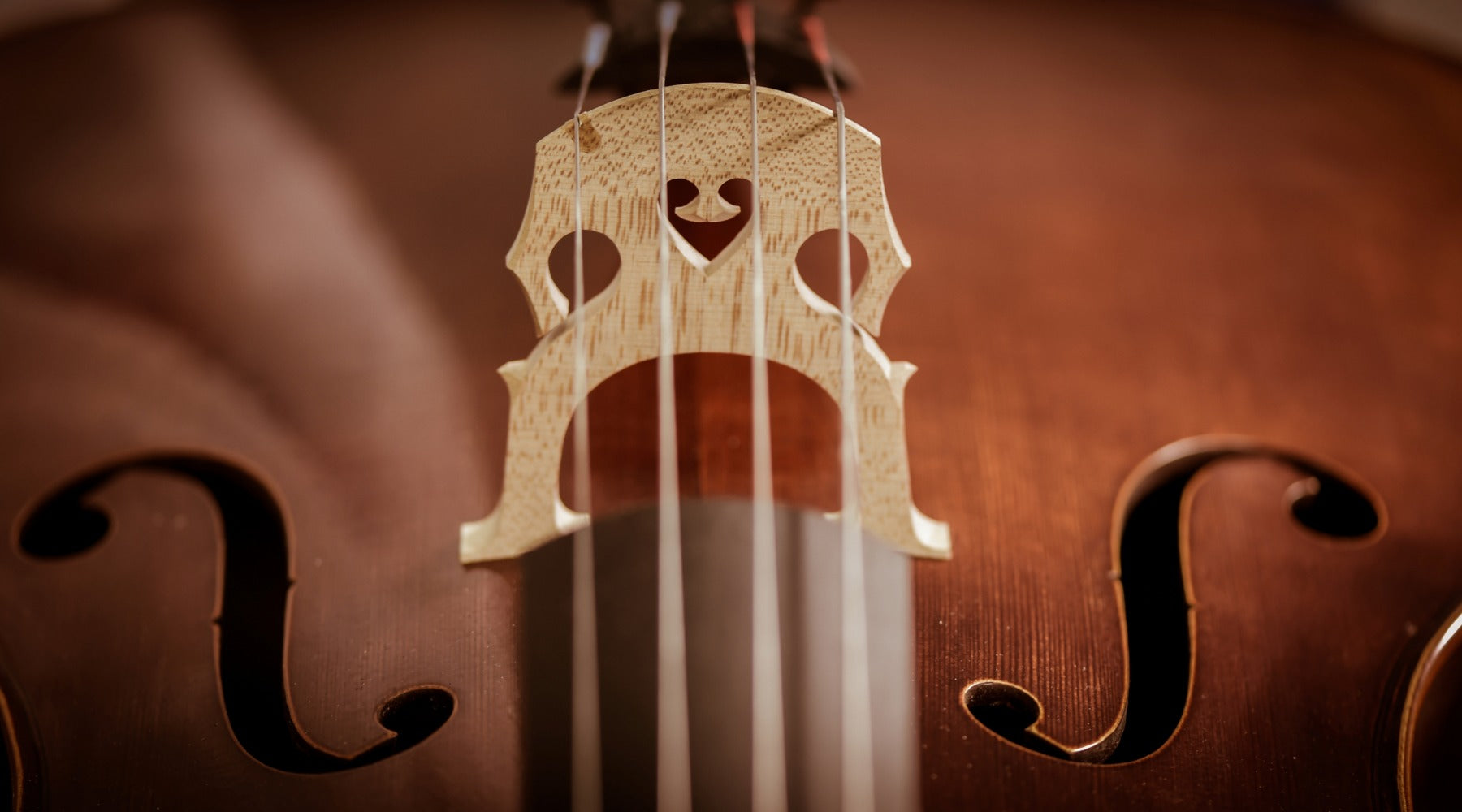
- Bridge: String heights, notches and the fitting of the feet must suit the mirrored layout. Turning the existing bridge around is not a substitute for a luthier fitting it correctly.
- Nut and fingerboard: Groove sizes, string clearances and the fingerboard shape need assessment. The chinrest and other fittings also need to suit right-shoulder playing.
This is why you can't simply restring a regular violin backward and expect it to sound or play properly. Any conversion should be handled by a professional luthier.
It also helps to separate two ideas. A left-handed violin is an instrument built in reverse. A left-handed player is simply a person who is left-handed, and many left-handed players use a standard violin in the conventional orientation.
For current availability or a special configuration, ask Shar Music's customer service team what options can be supplied. Confirm the instrument, size and setup before ordering.
Why Many Left-Handed Players Learn the Standard Way
A standard setup offers practical advantages in lessons, instrument choice and ensemble routines. These are reasons to consider it, rather than proof that every left-handed player should use the same approach.
Both hands do demanding work. The left hand coordinates pitch, shifting and vibrato on a standard violin, while the right hand controls the bow. Neither role is simply a supporting task, and handedness alone does not establish which setup will work best for an individual.
Both hands need training. Beginners develop unfamiliar coordination in each hand. A teacher can help distinguish the normal unfamiliarity of a new skill from a persistent difficulty with the setup.
Standard instruments are easier to compare. There are generally more standard models, sizes and fittings to choose from. Left-handed catalog models do exist, but local availability may be limited. Ask about trials, upgrades and trade-in options before committing.
Ensemble arrangements need discussion. Standard playing fits familiar section layouts. With a reversed setup, desk spacing and bow clearance may need adjustment. This is a practical planning issue, not an automatic barrier to playing in an orchestra.
Give yourself time to assess the fit. Early awkwardness is common with either approach, but there is no universal month-by-month adjustment period. Take discomfort and persistent coordination problems seriously and review them with your teacher.
The Case for Playing Left-Handed
A reversed setup is another valid approach. First-person accounts published by Linksgespielt describe players who prefer bowing with the left hand, including people who play in professional ensembles. These accounts show what is possible; they do not prove one orientation is better for all left-handed musicians.
It feels more natural. Some strongly left-handed players say that bowing with their dominant hand simply feels right. Tone, phrasing, and dynamics all come from the bow arm, and these players feel more expressive and confident when that arm is their stronger one.
Tradition isn't a rule. Others question why the violin should only be taught one way. Left-handed guitarists and drummers are common, and these players see no reason the violin should be different. For them, playing reversed is about choosing what works for their own body.
Individual physical needs. An injury, limb difference or restricted movement may make an adapted setup helpful. The useful adaptation depends on the person; reversing the violin does not solve every limitation. Work with an experienced teacher and luthier, and seek clinical guidance when an injury affects playing.
Reversed playing calls for a teacher willing to adapt instruction, because many demonstrations and diagrams assume a standard setup. Discuss instrument supply and ensemble arrangements early. Professional orchestral playing is possible: Linksgespielt has published an interview with reversed violinist Franz Slaboch about his work with the Bad Reichenhall Philharmonic. His experience is an example, not a promise that every ensemble will make the same arrangements.
Standard vs Left-Handed Violin: Side-by-Side Comparison
Here's how the two options compare on the practical points that matter most when you're getting started.
| Factor | Standard Violin | Left-Handed (Reversed) Violin |
|---|---|---|
| Instrument choice and price | Broad range of models, sizes and prices | Smaller selection, including catalog and custom models; compare actual quotes |
| Trying instruments | More opportunities to compare locally | May require a specialist shop, shipping or advance arrangements |
| Resale and trade-in | Wider potential market | More specialized market; check shop policies |
| Teaching | Fits most standard demonstrations and materials | Find a teacher willing to adapt demonstrations and technique |
| Ensemble seating | Fits conventional section arrangements | Discuss spacing, desk position and bow clearance with the ensemble |
| Shoulder rests and chinrests | More standard fitting options; fit still varies | Choose a chinrest suited to right-shoulder playing and check shoulder-rest compatibility |
Do Left-Handed People Play Violin Differently?
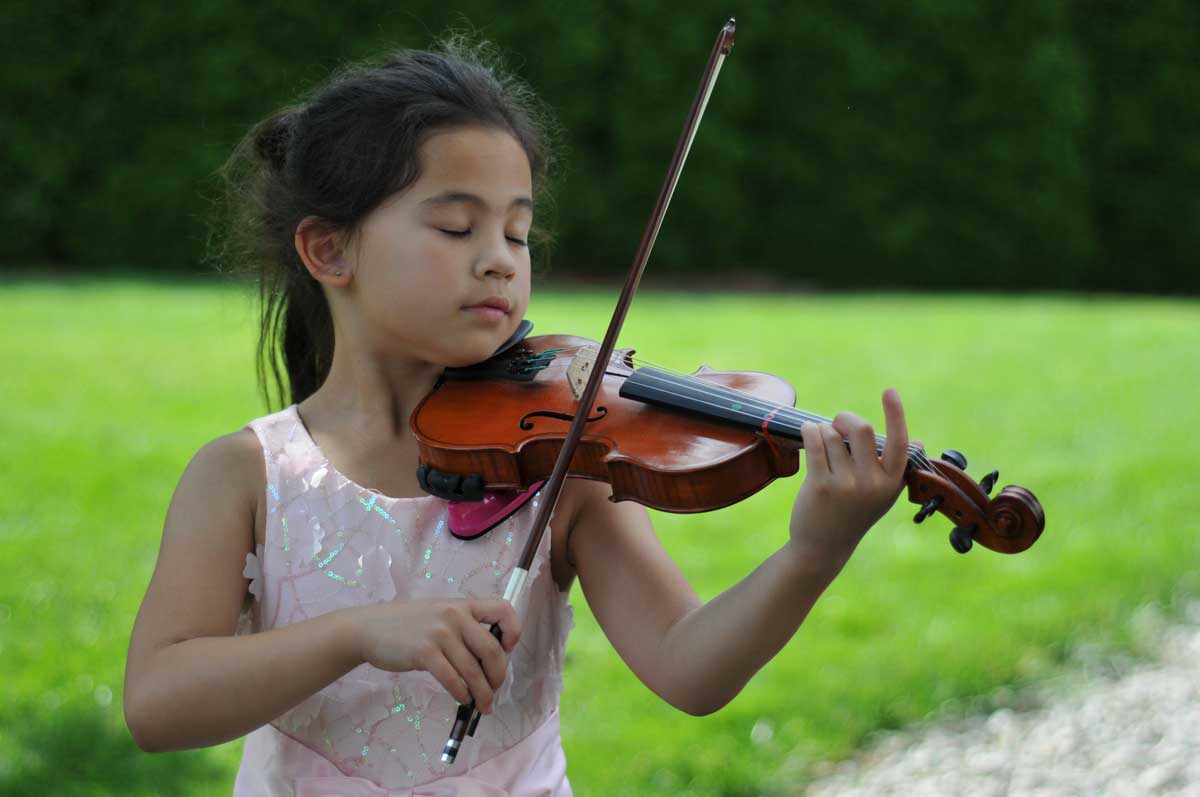
Many left-handed violinists use the standard arrangement: violin on the left shoulder and bow in the right hand. Others reverse it. Personal comfort, teaching support, physical needs and musical goals matter more than an assumption that handedness guarantees either an advantage or a disadvantage.
How to Decide: A Short Checklist
If you're still unsure, these questions can help point you in the right direction.
- Do you plan to join an orchestra or school ensemble? If so, a standard violin will make seating, section bowing, and group lessons much simpler.
- Can you find a teacher who teaches reversed technique? If no local teacher is comfortable with it, learning reversed will be much harder. Ask before you commit.
- Does the player have a physical need that affects either arm or hand? Discuss what each setup would ask that limb to do. An adapted instrument or hold may be useful, and reversing the setup is one option to assess.
- Is the player a child? A standard violin is often the most practical starting point for group lessons and rentals. Discuss the child's comfort, preferences and needs with the teacher rather than assuming every child will adapt in the same way.
If you are considering changing orientation after learning one way, discuss the retraining involved before buying or altering an instrument. A purpose-built left-handed model may be more practical than converting a standard violin. An acoustic conversion can involve opening the instrument and changing internal fittings; have a luthier assess its feasibility, cost and suitability first.
Find the Right Violin with Shar Music
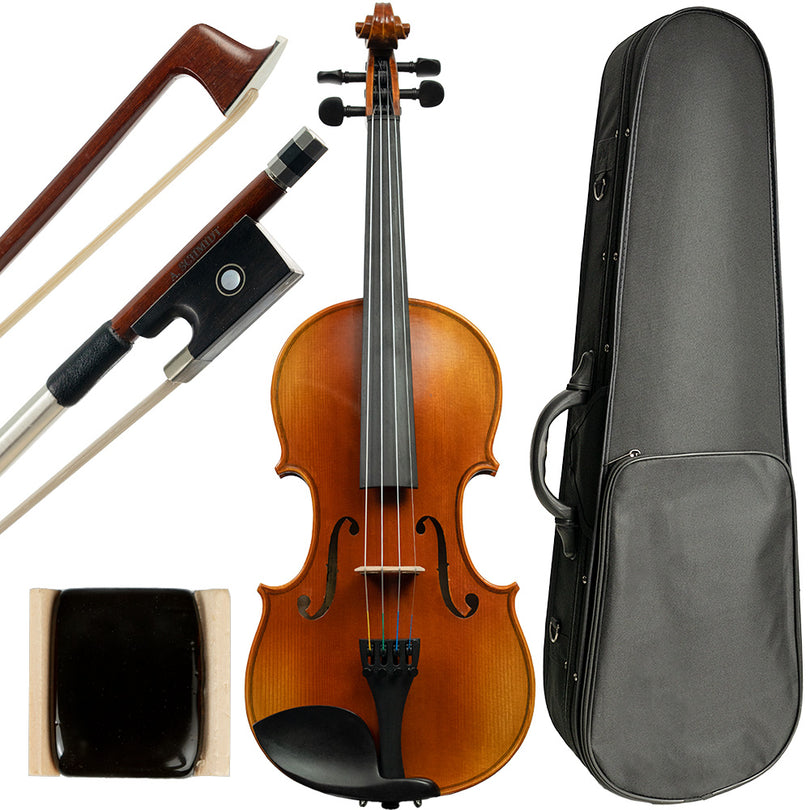
Whether you choose a standard or reversed setup, look for an instrument that suits the player and the intended lessons. Ask Shar Music's customer service team about current availability and whether a requested configuration can be supplied; do not assume that a custom conversion or left-handed trial is included.
If you are considering a standard instrument, explore our guide to the best violins for beginners. Review the 30-day guarantee for eligibility and exclusions; special orders are excluded from returns under that policy. Our in-home trial program is available for eligible instruments and bows, subject to its own terms. Confirm selection, charges, deposit requirements and return deadlines with the team before arranging a trial.
FAQ
Is there a violin for left-handed players?
Yes. Some makers offer left-handed catalog models, and custom-built instruments also exist. A purpose-built acoustic model mirrors the playing layout and associated setup. Ask Shar Music about current availability rather than assuming a particular model is stocked or available for conversion.
Do left-handed people play violin differently?
Many use the standard violin-on-left-shoulder, bow-in-right-hand arrangement. Others choose a reversed setup. Handedness alone does not determine the best choice for an individual.
Is it harder for a left-handed person to learn violin the standard way?
Not necessarily. Both hands need new coordination, and many left-handed people learn successfully on standard instruments. If a setup continues to feel difficult or uncomfortable, review it with a teacher rather than relying on a fixed adjustment period.
Can I just reverse the strings on a regular violin to play left-handed?
No. The bass bar and soundpost inside the violin, along with the bridge, nut, and fingerboard, are set up for a specific string order. Swapping strings alone does not provide a properly fitted mirrored acoustic setup and can compromise clearances and playability. Have a luthier assess whether conversion is appropriate.
Will I be able to play in an orchestra with a left-handed violin?
Yes, reversed players have worked in professional orchestras. The practical arrangements vary: discuss bow clearance, desk spacing and seating with your conductor or school director. An outside seat is not a universal requirement.
Should left-handed kids start on a standard violin?
A standard setup is often convenient for lessons, rentals and school ensembles, but the decision should take the child's needs and comfort into account. Discuss both options with the teacher, especially if there is a physical limitation or a strong preference for reversed playing.