
A violin bow looks simple: a long stick with a ribbon of hair stretched along it. Look closer and you will find parts that support the hair, adjust its tension, protect the bow and shape how it feels in your hand. Knowing their names helps you describe a problem to a repair shop and compare bows more confidently. This guide introduces the main parts of a conventional modern violin bow, from the head to the adjusting button.
Violin Bow Anatomy at a Glance
Most modern violin bows share the features below, although materials and construction details vary. This is a guide to the main visible parts and assemblies, not an exhaustive list of every fitting inside a bow.
| Part | Where it is and what it does |
|---|---|
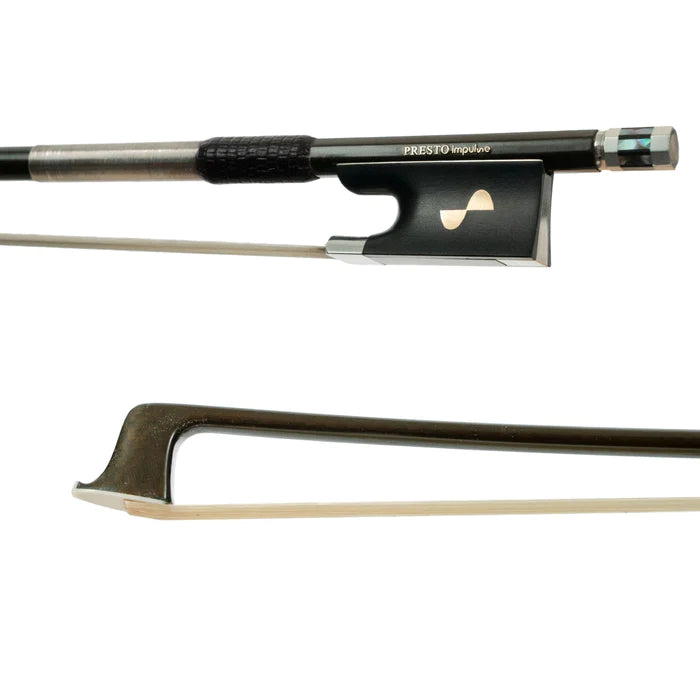
| Head, or tip end | The shaped end of the stick opposite the frog; it contains the anchoring point for one end of the hair. |
| Tip plate | A protective facing on the head, commonly made from a synthetic material, metal or bone. Materials vary, especially on older bows. |
| Stick | The long, cambered body that supports the tensioned hair and contributes to the bow's flexibility and response. |
| Hair | The ribbon of horsehair or synthetic fiber drawn across the strings, usually with rosin to provide grip. |
| Winding, or lapping | Material wrapped around the stick near the frog to protect the grip area and contribute to weight and balance. |
| Thumb leather, or thumb grip | A small leather or synthetic covering near the frog that cushions contact and protects the stick. |
| Frog | The movable assembly at the hand end that secures the other end of the hair and provides contact points for the bow hold. |
| Ferrule | The band at the hair exit of a conventional frog; it works with a spreading wedge to help hold the hair in a flat ribbon. |
| Button and screw | The button is the external part you turn. The attached screw engages an eyelet in the frog to move it and adjust hair tension. |
Other fittings, including plugs, slides and the eyelet, also matter. A bow's response depends on the whole assembly, so knowing the material or condition of just one part does not tell you everything about how it will play.
The Stick: Materials and Balance
The stick supports the hair under tension and flexes as you play. Its inward curve toward the hair is called the camber. Camber, stiffness, dimensions and weight distribution work together to shape the bow's response. Do not tighten the bow until that curve disappears.
Common stick materials include:
- Wood, including pernambuco and brazilwood. Pernambuco is a traditional choice for fine modern bows. Individual wooden sticks vary in stiffness, weight and response, and wood can react to environmental changes. A material name alone does not guarantee a particular tone or level of quality.
- Carbon fiber. Composite construction offers an alternative to wood, with designs ranging from student to professional models. Carbon-fiber sticks generally resist humidity-related changes well, but the hair, frog and other fittings still need care. They are not immune to damage.
- Fiberglass. Often used for affordable student bows, fiberglass can be a practical starting option. How a particular bow handles strokes such as spiccato depends on its design, setup and the player's technique; material alone does not establish what it can or cannot do.
Balance also affects how a bow feels. Two bows with the same total weight can feel different because that weight is distributed differently. There is no single fraction of the stick that defines the correct balance point for every bow. Try candidates on your own violin, ideally with your teacher, and compare control, response and comfort.
The Hair, Head and Tip Plate
During ordinary bowing, the hair is the part that contacts the strings. Many bows use horse-tail hair arranged side by side into a flat ribbon. The number of strands varies with the bow and the rehairer's choices; it is not a quality rating by itself.
Rosin helps the hair grip and release the string to sustain vibration. New or freshly rehaired hair needs an initial application, but more is not always better. Follow the bow hair or rosin maker's guidance, or ask the rehairer how much to apply.
Light-colored horsehair is common on violin bows, while darker hair is also used, particularly on some bass bows. Color alone does not reliably tell you the hair's quality or how a finished bow will respond. Synthetic bow hair also varies by product, so it should not automatically be treated as a cheaper or poorer-gripping substitute. Some synthetic systems have their own rosin and maintenance recommendations.
Natural horsehair responds to humidity: it tends to lengthen in damp conditions and shorten when dry. Adjust the tension gently for playing, then release it afterward. If the hair stays too tight with the button loosened, or cannot reach playing tension without excessive screw travel, stop forcing the adjustment and have the bow checked.
A shop can help decide whether rehairing is needed when:
- Enough strands have broken to make the ribbon noticeably sparse or uneven
- Grip remains unreliable after normal rosining and a check of playing technique
- Contamination affects the hair's performance
- The hair length no longer allows a useful adjustment range
These are reasons for inspection, not proof that every problem requires new hair. Humidity, rosin buildup or a fault in the adjusting mechanism can produce similar symptoms. Gray or dirty-looking hair alone is not a reliable rehair schedule.
At the head, the hair is secured inside a cavity, or mortise, with a fitted plug. The tip plate covers the face of the head and protects this delicate area. Avoid knocking the head against stands or the case. A crack or loose facing should be assessed by a bow repairer before further use.
The Frog End: Frog, Ferrule, Button, Screw and Grip
Much of the bow's hardware sits near the hand. These components let you adjust tension and maintain a stable ribbon of hair.
Frog
What it does: The frog secures the lower end of the hair and provides surfaces for a relaxed bow hold. Ebony is common, but other materials are used. On a conventional screw-adjusted bow, the frog moves along the stick as the button turns. A fitted slide covers the cavity where the hair is secured.
What to watch for: Side-to-side wobble, a loose or missing slide, cracks, or a frog that no longer moves normally. Do not try to correct the fit by forcing the button.
Ferrule
What it does: The ferrule sits where the hair exits the frog. Together with a spreading wedge, commonly made of wood, it helps keep the hair distributed as a flat ribbon.
What to watch for: A loose ferrule or spreading wedge, or hair that bunches unevenly. Leave reseating and fitting these parts to a bow repairer.
Button, Screw and Eyelet
What they do: The button is the external adjuster at the end of the stick. The attached screw engages the threaded eyelet fitted into the frog. Turning the assembly moves the frog to change hair tension. On most conventional bows, viewed directly from the button end, clockwise tightens and counterclockwise loosens.
What to watch for: A button that becomes difficult to turn, spins without moving the frog, or no longer provides a useful adjustment range. A worn eyelet is one possible cause, but disengaged or damaged threads and other fit problems can also be involved. Never force the mechanism or continue tightening to compensate for a problem.
Winding, or Lapping
What it does: Wire, thread or another wrapping protects the stick near the grip and adds weight that contributes to balance. The exact area touched by the index finger varies with the bow hold.
What to watch for: Winding that shifts, loosens or unravels. A repairer can assess whether it needs securing or replacing.
Thumb Leather
What it does: A leather or synthetic grip near the frog cushions contact around the thumb and protects the stick from wear. Its shape and material vary, and not every bow uses animal leather.
What to watch for: A grip that is worn through, loose or uncomfortable. Have it checked before exposed wood becomes worn or damaged.
Bow Care and Parts That Wear Out
A few regular habits help protect the bow:
- Release hair tension after playing. Loosen the button enough to remove playing tension while keeping the frog and screw engaged. Do not remove the screw as part of routine storage, and take care not to snag slack hair.
- Keep fingers off the hair. Skin oils can contaminate the ribbon and interfere with grip.
- Wipe the stick with a soft, dry cloth. Remove loose rosin dust after playing without pulling on the hair or scrubbing the finish.
- Store the bow securely in its case. Keep the head clear of the case edges and avoid hot cars, heaters and large environmental swings.
- Stop when adjustment feels abnormal. A jammed button, a loose frog or hair that will not reach a suitable tension calls for inspection, not extra force.
A bow repairer can assess the hair, replace a worn grip and service winding or fittings. Rehairing involves accurately fitting the hair and its securing parts; the work can damage the head or frog if done incorrectly. Leave rehairing, tip repairs, camber changes and loose ferrules to someone trained in bow repair. Do not try to straighten a stick with heat or glue a cracked head at home.
Find the Right Bow at Shar Music
Browse our violin bows, or start with our beginner violin bows if you are choosing a first bow. Our wood and carbon fiber bow selection groups options by material to help you explore the range. Compare the individual bow's feel and response rather than choosing by material alone.
For everyday use, choose rosin appropriate to your bow hair and playing needs. If the bow needs a rehair or attention to a worn or damaged part, contact our repairs and restoration team for an assessment.
FAQ
What are the parts of a violin bow called?
The main visible parts include the head or tip end, tip plate, stick, hair, winding or lapping, thumb grip, frog, ferrule and adjusting button. The button is attached to a screw that engages an eyelet in the frog. Plugs, slides and other fittings also help secure the hair and keep the mechanism working.
What is the frog of a violin bow?
The frog is the assembly at the hand end that secures one end of the hair and provides contact points for your bow hold. Ebony is common, but other materials are used. On a conventional modern bow, the frog moves along the stick as the button and screw adjust hair tension.
What is the ferrule on a violin bow?
The ferrule is the band at the frog where the hair exits. It works with a spreading wedge to help maintain a flat ribbon of hair. If it becomes loose or the hair bunches unevenly, have a bow repairer inspect it.
What is the difference between a wood and a carbon fiber bow?
Wooden bows, including pernambuco bows, vary naturally in their playing characteristics and can respond to environmental changes. Carbon-fiber sticks generally resist humidity-related changes well and come in many designs and price levels. Neither material guarantees a particular tone or level of performance. Compare individual bows on your violin, and remember that their hair and fittings still need care.
How often should a violin bow be rehaired?
There is no single schedule for every player. Playing time, contamination, broken strands and the usable tension range all matter. Ask a shop to assess a sparse or uneven ribbon, persistent grip problems, or hair that cannot be adjusted normally. Humidity or mechanism problems may also be involved, so do not assume a rehair is always the answer.
What does the screw on a violin bow do?
The screw engages an eyelet in the frog and moves it to adjust hair tension. You turn it using the external button. On most conventional bows, viewed from the button end, clockwise tightens and counterclockwise loosens. Release playing tension after use, and stop if the button jams or turns without moving the frog.
What is the thumb leather for on a bow?
The thumb leather, or a synthetic grip serving the same purpose, cushions contact near the frog and protects the stick from wear. If it becomes loose or wears through, have a repairer replace it before the exposed stick is damaged.