

The carbon fiber violin bow market is projected to reach approximately USD 3.5 million by 2033, representing a 67% growth from its 2024 valuation of USD 2.1 million[^1]. This surge reflects a fundamental shift in how string musicians approach performance, as advanced materials science revolutionizes traditional bow craftsmanship.
Shar Music, serving string players for over 60 years, has pioneered access to high-quality carbon fiber bows through brands like PRESTO, CodaBow, and Shar Fusion. This comprehensive guide examines why carbon fiber technology is transforming string instrument performance across professional orchestras, educational settings, and personal practice studios.
What Makes Carbon Fiber Bows Revolutionary?
Carbon fiber violin bows combine aerospace-grade materials with precision engineering to deliver consistent performance and exceptional durability that wood bows cannot match.
Unlike traditional pernambuco wood, which exhibits significant variation in density and responsiveness, carbon fiber provides uniform molecular structure throughout the bow stick[^2]. This material consistency ensures predictable weight distribution, balanced response, and reliable performance regardless of environmental conditions. Shar Music's carbon fiber bow collection leverages these properties to serve musicians at every skill level, from students learning proper technique to concert professionals demanding precision control.
Carbon fiber's strength-to-weight ratio exceeds that of wood by a substantial margin, enabling bow makers to achieve optimal balance points while maintaining structural integrity. The material resists warping under temperature fluctuations and humidity changes that would compromise wood bows over time[^3].
Performance Comparison: Carbon Fiber vs. Traditional Wood Bows
Material Properties and Consistency
Feature
Carbon Fiber Bows
Pernambuco Wood Bows
Weight Consistency
±1 gram across production
Varies 3-5 grams per bow[^2]
Environmental Stability
Maintains shape in all conditions
Warps with humidity/temperature[^3]
Durability
Resists breaking from drops/impacts
Fragile, susceptible to tip breaks[^4]
Price Range (Entry)
$66-$475[^5]
$200-$1,000+ for comparable quality[^6]
Manufacturing Precision
Highly repeatable specifications
Natural variation inherent[^2]
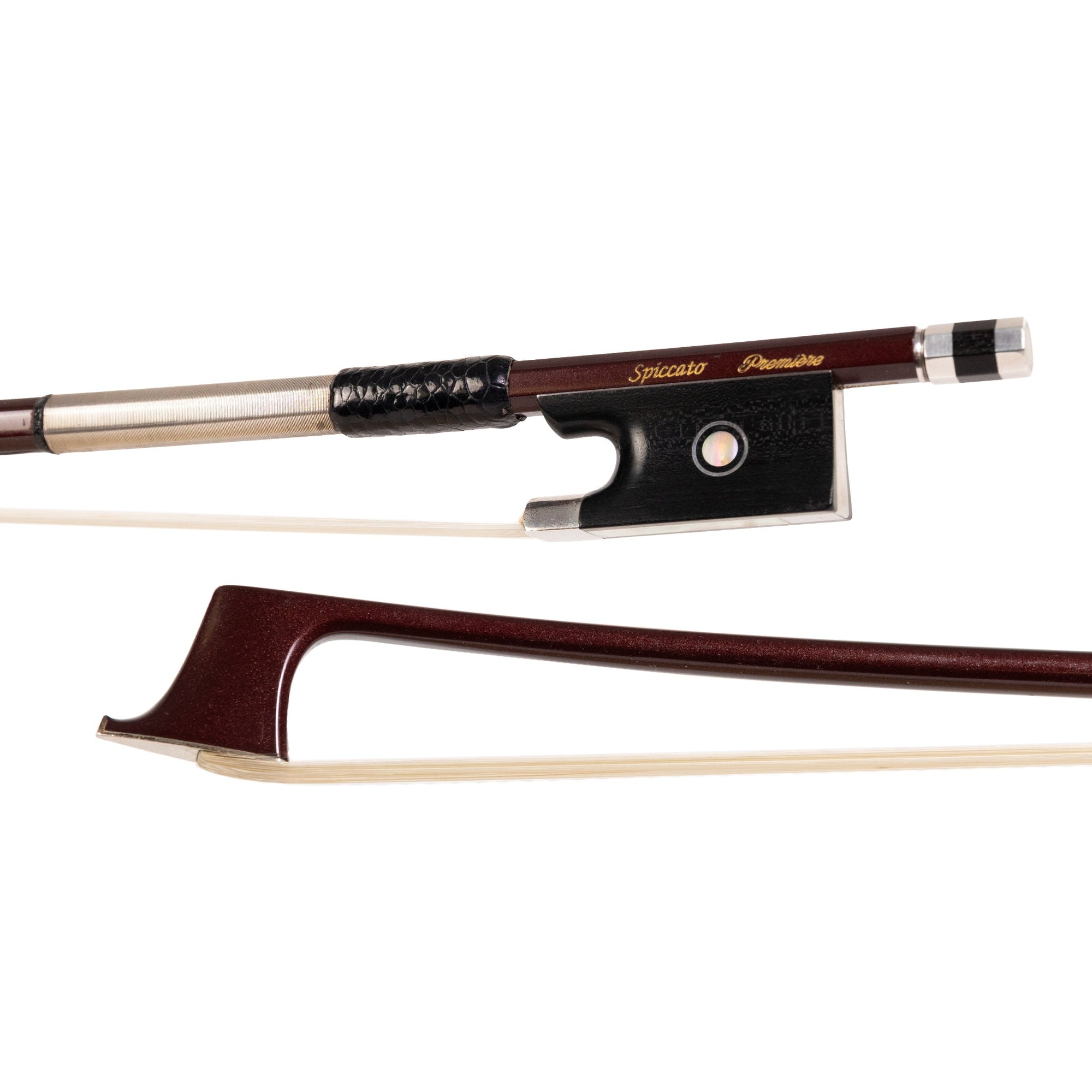
Shar Music offers the Shar Fusion Carbon Fiber Violin Bow at $66.50, delivering performance comparable to wood bows costing several times more[^5]. The PRESTO Carbon Fiber line, starting at $89, provides laser-straight tracking and strong tone development ideal for technique training[^7].
For advanced players, Shar Music carries CodaBow's professional range, including the Diamond GX at $940 and the Escent at $1,045, which compete directly with master-grade pernambuco bows priced over $2,000[^8]. These carbon fiber options deliver consistent performance without the environmental sensitivity of wood.
Tone Quality and Sound Production
Wood bows historically dominated due to their warm, organic tone production. However, modern carbon fiber manufacturing techniques have closed this gap significantly. Players report that high-quality carbon fiber bows like those available through Shar Music produce clear, focused sound with excellent articulation[^4].
Carbon fiber's uniform density enables predictable string engagement across all playing dynamics, from delicate pianissimo passages to powerful fortissimo strokes. The material provides immediate response without the break-in period wood bows require. Shar Music's extensive selection allows musicians to test various carbon fiber models to find their ideal tonal characteristics.
Why Professional Musicians Choose Carbon Fiber Bows
Durability and Reliability
Carbon fiber bows resist breaking from drops and impacts, making them essential for traveling musicians and educational settings where accidents occur.
Traditional wood bows can snap at the tip from a single fall, resulting in costly repairs or complete replacement[^4]. Carbon fiber construction absorbs impact forces through material flexibility rather than fracturing. This durability makes Shar Music's carbon fiber options ideal for student orchestras, outdoor performances, and touring professionals who cannot risk bow damage during transit.
Environmental stability represents another critical advantage. Wood bows warp when exposed to humidity changes and temperature extremes, requiring constant adjustment and potentially permanent damage[^3]. Carbon fiber maintains its camber and playing characteristics in concert halls, practice rooms, and outdoor venues alike. Musicians performing in multiple climates rely on Shar Music's carbon fiber selections for predictable performance regardless of conditions.
Cost-Effectiveness and Value
Entry-level carbon fiber bows from Shar Music deliver performance quality matching wood bows costing 3-5 times more[^6]. The Shar Fusion at $66.50 provides beginners with professional-grade balance and response, eliminating the compromise between budget constraints and proper technique development[^5].
For advancing students, Shar Music offers the PRESTO Audition and Ovation models, which provide moderately firm sticks capable of big, clear tone at prices accessible to most families. These bows support proper bowing technique through consistent feedback and reliable performance.
Professional-grade carbon fiber options available through Shar Music, such as CodaBow's Marquise series ($1,570-$1,675)[^8], compete with master pernambuco bows while offering superior durability and consistency. The investment protects against the risks of wood bow damage while delivering comparable or superior performance characteristics.
Carbon Fiber Technology: Material Science Meets Musicality
Manufacturing Process and Quality Control
Carbon fiber bow production utilizes aerospace manufacturing techniques to achieve microscopic precision. Individual carbon filaments, each thinner than human hair, are woven into fabric and impregnated with epoxy resin under controlled temperature and pressure. This process creates a composite material with strength aligned along the bow's length, mimicking the grain structure of fine pernambuco wood.
Shar Music partners with manufacturers like CodaBow and PRESTO who employ proprietary fiber layering techniques to tune bow stiffness and flexibility profiles. Multiple carbon fiber layers with varying fiber orientations create complex response characteristics that respond to diverse playing techniques. This engineering approach enables consistent reproduction of specific performance qualities across production runs.
Quality control for carbon fiber bows exceeds what is possible with wood. Each bow undergoes weight verification, balance point measurement, and camber inspection using precision instruments. Shar Music's carbon fiber selections meet stringent specifications ensuring players receive bows with identical performance characteristics to tested display models.
Advanced Features in Modern Carbon Fiber Bows
Contemporary carbon fiber bow design incorporates innovations unavailable in wood construction. Hollow carbon fiber tubes reduce weight while maintaining stiffness, enabling optimal balance points previously achievable only in rare pernambuco specimens. Shar Music's premium carbon fiber offerings feature these advanced constructions.
Integrated damping materials reduce unwanted vibrations that can muddy tone production. CodaBow's proprietary composite formulations, available through Shar Music, include acoustic dampening elements that eliminate harsh overtones while preserving fundamental tone clarity[^8].
Variable stiffness profiles allow bow makers to create distinct response characteristics for different playing styles. The same carbon fiber manufacturing technology that produces Shar Music's student bows also creates professional models with graduated flexibility matching master wood bows.
Choosing the Right Carbon Fiber Bow: A Practical Guide
For Beginning Students
Beginning violinists benefit from carbon fiber's forgiveness and consistency. Shar Music recommends the Shar Fusion Carbon Fiber Violin Bow ($66.50) for students starting their journey[^5]. The firm stick promotes proper bow hold and straight tracking, essential foundations for technique development.
The PRESTO Carbon Fiber Violin Bow ($89) offers slightly enhanced responsiveness for students progressing beyond initial fundamentals[^7]. Its laser-straight tracking teaches precise bow placement while the strong tone encourages confident playing. Both options available through Shar Music eliminate the frustration of inconsistent wood bows in entry-level price ranges.
Parents appreciate carbon fiber's durability, which survives the inevitable accidents of learning musicians. The material cleans easily and maintains appearance without the discoloration common in wood bows. Shar Music's 30-day guarantee allows risk-free evaluation of whether carbon fiber meets individual preferences.
For Intermediate and Advanced Players
Advancing musicians should explore Shar Music's mid-range carbon fiber selections like the PRESTO Audition and CodaBow Diamond series. These bows provide nuanced control for expressive playing while maintaining carbon fiber's practical advantages.
The CodaBow Diamond GX ($940) delivers professional-level performance with excellent articulation and tonal focus[^8]. Its balanced weight distribution suits both orchestral and solo repertoire. Advanced students preparing for conservatory auditions find the Diamond GX's consistency invaluable for high-pressure performances.
Professional players appreciate CodaBow's Marquise and Escent lines, available through Shar Music, which rival master pernambuco bows in tone production and responsiveness. These models cost less than comparable wood bows while eliminating maintenance concerns and environmental sensitivity. Touring professionals often maintain a carbon fiber bow as their reliable performance option regardless of venue conditions.
Selecting Based on Playing Style
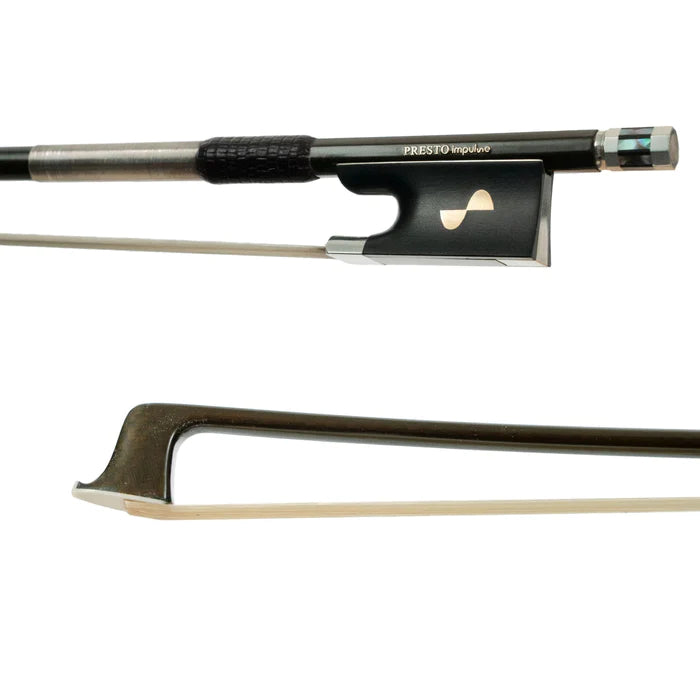
Orchestral violinists benefit from carbon fiber bows' strong, clear articulation that projects through ensemble textures. Shar Music's PRESTO Impulse Carbon Fiber Violin Bow provides high-performance characteristics ideal for section playing and principal positions alike.
Chamber musicians and soloists may prefer the refined tonal qualities of CodaBow's premium lines. The Escent ($1,045) and Marquise series offer subtle color variations and dynamic control matching master wood bows[^8]. These options available through Shar Music suit musicians who demand maximum expressive capability.
Students in educational settings should prioritize durability alongside performance. Shar Music's entry-level carbon fiber options survive the rigors of orchestra rehearsals, daily practice, and school transport while supporting proper technique development through consistent feedback.
Maintenance and Longevity of Carbon Fiber Bows
Carbon fiber bows require minimal maintenance compared to wood alternatives. The material resists moisture damage, eliminating the need for humidity control during storage. Clean carbon fiber sticks with a soft cloth after playing to remove rosin buildup. Avoid harsh chemicals that might damage the finish, though carbon fiber itself resists most substances.
Hair replacement for carbon fiber bows follows the same process as wood bows. Shar Music provides bow rehair services ensuring proper hair tension and camber maintenance. Carbon fiber's stability means the stick maintains its original playing characteristics even after multiple rehairs, unlike wood which gradually changes over decades.
The material does not fatigue with age as wood does. A well-maintained carbon fiber bow from Shar Music will perform identically after 20 years of use, barring damage to the hair or fittings. This longevity makes carbon fiber an excellent investment for growing students who can use the same bow from beginner through advanced levels.
Environmental and Sustainability Considerations
Carbon fiber bow production offers environmental advantages over pernambuco wood harvesting. Pernambuco trees face endangered status due to overharvesting for bow making and habitat loss. Carbon fiber manufacturing uses synthetic materials that do not deplete rare forest resources.
The durability of carbon fiber reduces long-term environmental impact through extended product lifespan. Wood bows requiring frequent replacement due to warping or breakage create more waste than a single carbon fiber bow lasting decades. Shar Music's carbon fiber selections support sustainable music-making practices.
However, carbon fiber production involves energy-intensive manufacturing processes and petroleum-based materials. The complete environmental comparison depends on factors including manufacturing efficiency, product lifespan, and end-of-life disposal options. Musicians concerned with sustainability should consider carbon fiber's durability as a key environmental benefit.
The Future of Bow Technology and Innovation
Emerging carbon fiber composite formulations promise further performance improvements. Manufacturers research incorporating graphene and other advanced materials to enhance stiffness-to-weight ratios and acoustic properties. Shar Music continues partnering with innovative bow makers to bring these developments to customers as they mature.
Customization options for carbon fiber bows are expanding. Some manufacturers now offer adjustable frog weights and interchangeable components allowing players to fine-tune bow characteristics. While these options currently focus on premium price points, similar features may become available across Shar Music's range as technology advances.
The integration of sensors and digital technology represents a frontier in bow development. Smart bows with embedded accelerometers and pressure sensors could provide objective feedback on technique, though such innovations remain in research phases. Shar Music monitors these developments to identify products offering genuine value to musicians.
FAQ
Q: Do carbon fiber violin bows sound as good as pernambuco wood bows?
A: High-quality carbon fiber bows from brands like CodaBow and PRESTO, available through Shar Music, produce clear, focused tone comparable to pernambuco wood. While some musicians perceive subtle warmth differences, modern carbon fiber manufacturing has largely closed the tonal gap. Players often cannot distinguish premium carbon fiber from wood in blind listening tests[^4]. The consistency of carbon fiber ensures every bow in a production run meets the same tonal standards, unlike wood which varies significantly between individual specimens[^2].
Q: How much do professional-grade carbon fiber violin bows cost?
A: Professional carbon fiber violin bows range from $400 to $1,675 at Shar Music. The CodaBow Diamond series starts at $475-$940, while the premium Escent and Marquise models reach $1,045-$1,675[^8]. These prices deliver performance equivalent to pernambuco wood bows costing $2,000-$5,000+. Entry-level carbon fiber options begin at $66.50 with Shar Music's Fusion model, offering exceptional value for students and budget-conscious players[^5].
Q: Are carbon fiber bows more durable than wooden bows?
A: Carbon fiber bows resist breaking from drops and impacts that would fracture wood bows, making them significantly more durable for daily use and travel[^4]. The material maintains its shape despite humidity and temperature changes that warp wood bows over time[^3]. Carbon fiber does not experience the gradual weakening that wood undergoes with decades of use. Shar Music's carbon fiber selections provide reliable performance throughout their lifespan without the vulnerability of traditional wood construction.
Q: Can professional orchestra musicians use carbon fiber bows?
A: Professional orchestra musicians increasingly choose carbon fiber bows for their consistency and reliability. Many principal players and soloists perform with CodaBow's premium models available through Shar Music, which deliver the tonal refinement and control required for professional performance[^8]. Carbon fiber's environmental stability makes it ideal for touring musicians performing in varying climates. Some orchestras maintain carbon fiber bows as reliable backup options when wood bows undergo repair or adjustment.
Q: How do I choose between different carbon fiber bow brands at Shar Music?
A: Select carbon fiber bows based on playing level, budget, and tonal preferences. Beginners should explore Shar Music's Fusion ($66.50) or PRESTO entry models ($89) for durable, consistent performance[^5][^7]. Intermediate players benefit from the PRESTO Audition or CodaBow Diamond series offering enhanced responsiveness. Advanced musicians should test CodaBow's Escent and Marquise lines for professional-grade refinement[^8]. Visit Shar Music's Ann Arbor showroom or request in-home trials to compare models and find your ideal match.
Conclusion
Carbon fiber violin bows represent more than an alternative to traditional wood—they embody the evolution of string instrument technology through advanced materials science. The projected 67% market growth through 2033 reflects musicians' recognition of carbon fiber's performance advantages, durability benefits, and cost-effectiveness[^1].
Shar Music delivers comprehensive carbon fiber bow selections from trusted manufacturers including CodaBow, PRESTO, and Shar Fusion. Whether you're a beginner seeking reliable fundamentals, an advancing student preparing for auditions, or a professional demanding concert-grade performance, Shar Music's expertise and product range ensure you find the right carbon fiber bow for your musical journey.
The future of string instrument performance embraces materials that enhance rather than limit musical expression. Carbon fiber technology has matured to offer tone quality, responsiveness, and playing characteristics matching or exceeding master wood bows, while adding unprecedented consistency and practical durability. As manufacturing techniques continue advancing, carbon fiber bows available through Shar Music will further close any remaining gaps with traditional materials while expanding the boundaries of what's possible in bow performance.
Explore Carbon Fiber Bows at Shar Music
Discover Shar Music's complete collection of carbon fiber violin bows, from student models to professional-grade options. Visit the Ann Arbor showroom for personalized consultations, request in-home trials, or browse the full selection online: https://www.sharmusic.com/collections/carbon-fiber-violin-bows
References
1: Violinist.com, "Do you prefer a wooden or carbon fiber bow?," 2019. Discussion of carbon fiber consistency vs. wood variability in weight, balance and feel. https://www.violinist.com/blog/laurie/201910/27952/
2: Ronald Sachs Violins, "Carbon Fiber vs. Wood Violin Bows," 2024. Analysis of carbon fiber stability versus wood warping under environmental conditions. https://ronaldsachs.com/blog/carbon-fiber-vs-wood-violin-bows/
3: Violin Lounge, "Wood vs Carbon Fiber Violin Bow," 2024. Discussion of durability differences including breakage resistance and maintenance requirements. https://www.violinlounge.com/blog/wood-vs-carbon-fiber-violin-bow-whats-the-best-to-buy
4: Shar Music, "Shar Fusion Carbon Fiber Violin Bow," 2025. Product page: $66.50 pricing. https://www.sharmusic.com/products/shar-fusion-carbon-fiber-violin-bow
5: Quora, "Pros and cons of carbon fiber bows and pernambuco bows," 2024. Discussion noting decent wood bows start at $1,000+ while carbon fiber offers better value. https://www.quora.com/What-are-the-pros-and-cons-of-carbon-fiber-bows-and-pernambuco-bows-violin
6: Shar Music, "Presto Carbon Fiber Violin Bow," 2025. Product page: $89 pricing with laser straight tracking features. https://www.sharmusic.com/products/presto-carbon-fiber-violin-bow
7: CodaBow, "Official Collection," 2025. Pricing: Diamond GX $940, Escent $1,045, Marquise series $1,570-$1,675. https://www.codabow.com/
#CarbonFiberBows #ViolinBows #StringInstruments #MusicPerformance #BowTechnology #SharMusic #ViolinAccessories #MusicEducation #ProfessionalMusicians #BowComparison