
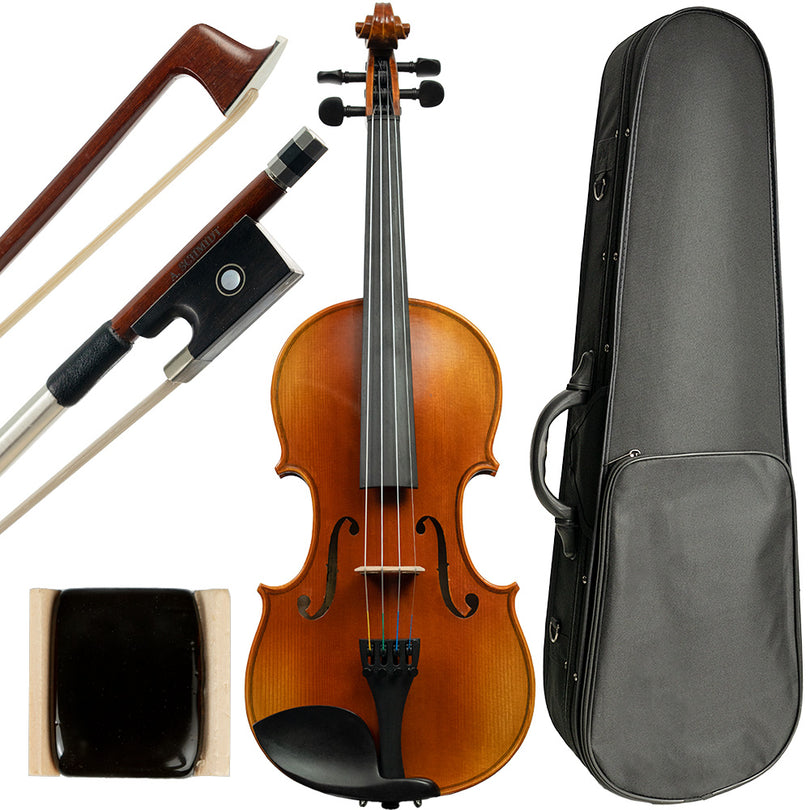




Winter is one of the busiest seasons for string players. School concerts, holiday services, recitals and family gatherings tend to land in the same few weeks, often just as the weather turns cold and indoor heating runs around the clock. Those conditions can be hard on a violin, viola, cello or bass, and the last thing anyone wants is a surprise right before a performance.
The good news is that a little preventive care goes a long way. In this guide, we explain how winter conditions affect wooden instruments, how to measure what your instrument is actually experiencing, how to use humidification products sensibly, how to travel in the cold, and which changes are worth showing to a luthier before your next concert.
Why Winter Conditions Can Affect String Instruments
Violins, violas, cellos and basses are made mostly of thin, carved wood, and wood responds to its surroundings. It takes on moisture when the air is humid and gives it up when the air is dry, swelling and shrinking slightly as it does. In winter, outdoor air often contains little moisture. Heating that air indoors lowers its relative humidity, which can leave wooden instruments in much drier conditions. Many homes, schools and concert venues end up much drier in January than they were in July.
Rapid temperature changes add another layer. Carrying an instrument from a freezing parking lot into a warm rehearsal room asks the wood, varnish, glue joints and strings to adjust all at once.
Players may notice a few common changes during the colder months:
- Strings drifting out of tune more often than usual
- Pegs that slip or feel tighter than normal
- A buzz or rattle that wasn't there before
- An open seam where the top or back meets the ribs
- A change in how the instrument responds or sounds
Not every one of these is caused by dry air. A buzz might come from a loose fine tuner, and tuning trouble can come from new strings that are still stretching. Winter conditions are one possible factor, which is why measuring and observing carefully comes before reaching for a fix.
Measure Conditions Before Choosing a Solution
The most useful winter-care tool is often the simplest: a hygrometer, which measures relative humidity. Many cases come with one built in, and a compact model such as the Mini Digital Hygrometer or the Stretto® Hygrometer Unit can be added to cases that don't. A second hygrometer in the room where you practice gives you a fuller picture. Knowing the actual numbers helps you decide whether your instrument needs extra moisture at all.
One reading rarely tells the whole story. Humidity can shift through the day as the furnace cycles on and off, and it can differ a lot between your home, a school band room and a church sanctuary. Check readings at different times and in the places your instrument spends the most time. A pattern over several days is more meaningful than a single number.
You will often see a target range of roughly 40 to 60 percent relative humidity mentioned for stringed instruments. Treat that as a starting point rather than a rule, and ask a luthier to confirm the range that suits your particular instrument and any humidification product you plan to use.
Most importantly, let measurement guide your choices. If your readings stay within a healthy range, adding moisture may not be necessary. Adding water blindly as a winter routine can create a different set of problems, which we cover below.
Use Humidification Products as Directed
If your readings show that the air is consistently too dry, there are a few practical ways to add moisture. Each has its own strengths:
- Room humidifiers raise humidity in the space where the instrument lives and is played. They are helpful for players who keep their instrument out on a stand, but they need regular cleaning and refilling.
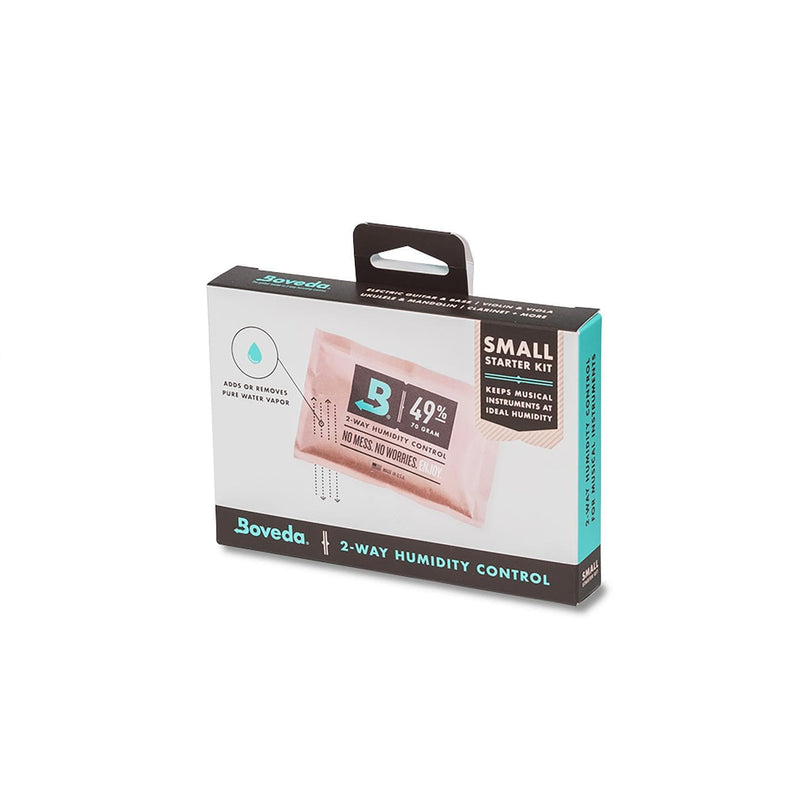
- Case humidifiers sit inside the case and add moisture to the small space around the instrument. They are convenient for students who carry their instrument between home and school. Options include the Stretto® Humidifier with Hygrometer for Violin or Viola and Boveda Two-Way Humidity Packs.
- Instrument humidifiers are designed to sit inside the instrument itself, usually through the f-hole. Fit matters here, since a violin, viola, cello and bass each need a product sized for that instrument. The Dampit Violin Humidifier and the Humidi-Guard™ Humidifier for Violin or Viola are two common examples.
Whichever approach you choose, follow the manufacturer's instructions closely. Check refillable devices for water needs and leaks; do not add water to sealed Boveda packs. Replace those packs as directed. Liquid water on varnish or inside the body can cause real harm.
Too much humidity is also a concern. Overhumidified wood can swell, seams can loosen, and the instrument may sound dull or feel sluggish. Keep using your hygrometer after you start humidifying. Please avoid homemade fixes such as damp sponges or wet cloths in the case. No single accessory prevents every type of winter damage, so think of humidifiers as one part of a broader routine.
Manage Travel and Temperature Changes
Winter performance season usually means a lot of travel: to school rehearsals, to holiday concerts, to a relative's house for a family sing-along. A few simple habits help your instrument handle those trips.
Always transport the instrument in its case, even for short walks from the car to the door. A well-fitted case with a cover provides insulation and buffers the instrument from sudden changes, and case covers can add an extra layer for cases that need one. Keep the case zipped or latched, and carry it inside your heated car rather than in the trunk when you can.
Limit unnecessary exposure to the cold. Plan your route so the instrument spends as little time outdoors as possible, and bring it inside with you instead of leaving it in the car. A parked car can get very cold very quickly in winter, and an unattended instrument is also at risk of theft.
When you arrive somewhere warm, give the instrument time to adjust before you open the case and play. There is no single safe waiting period for every situation, since it depends on how cold it was outside, how long you traveled and how warm the room is. Keep the case closed during the initial adjustment and follow your luthier's guidance; the temperature of the case exterior alone does not confirm that the instrument inside has warmed up. Once it has settled, check the tuning gently before warming up, and allow a few extra minutes at the concert venue for this.
Recognize Problems That Need a Luthier
A quick visual and listening check a week or two before a performance can catch small issues while there is still time to address them. Take a few minutes in good light and look for:
- Unusual rattles or buzzes when you play
- Visible openings along the edges where the top or back meets the ribs
- New cracks in the top, back, ribs or scroll
- Persistent tuning trouble, such as pegs that won't hold or strings that keep dropping
- A changed bridge position, including a bridge that is leaning or has shifted from its usual spot
If you notice any of these, the next step is to contact a luthier. This kind of routine observation is something every player can do, but the repair itself belongs in professional hands. Please don't try to glue an open seam, force a stuck peg or reposition the bridge on your own. Well-meaning home fixes can make a small problem larger and more expensive to correct.
Timing matters too. Early assessment of an open seam or crack can help limit further damage, though the repair needed depends on its location and severity. The same issue discovered the night before a concert leaves little time for a proper repair and for the instrument to settle afterward. An early check gives your luthier room to do the work well and gives you peace of mind on stage.
Keep Your Instrument Ready for the Season
A steady winter routine of measuring, humidifying only when needed, traveling carefully and checking your instrument early will help it sound its best through the holidays. If your readings show that you need extra moisture, browse our humidifier collection for current options, or narrow it down with our violin and viola humidifiers and cello and bass humidifiers. Choose one that fits your instrument and follow its instructions. If you notice damage or changes that don't go away, reach out to the Shar Music violin shop before attempting any repair. Our team is happy to help you keep playing with confidence.
FAQ
How does dry winter air affect a violin?
Wood gives up moisture in dry air and shrinks slightly. This can lead to tuning instability, slipping pegs, open seams and, in some cases, cracks. Not every winter change is caused by dryness, so it helps to measure humidity before drawing conclusions.
How can I tell whether my instrument needs a humidifier?
Use a hygrometer in the case and in the room where you play, and watch the readings over several days. If humidity stays consistently low, a humidifier may help. Ask a luthier to confirm the right range for your instrument.
Can too much humidity also cause problems?
Yes. Overhumidified wood can swell, seams can loosen and the instrument may sound dull. Leaking devices can also damage varnish. Keep monitoring humidity after you start humidifying.
Is it safe to leave a violin in a cold car?
We recommend against it. Cars can get very cold quickly, and the instrument is also exposed to theft. Bring it inside with you whenever possible.
Should I open the case immediately after coming indoors?
It's best to wait. Give the instrument time to adjust to the warmer room while it stays in the case. The right amount of time depends on how cold it was and how long you were outside.
Which winter-related changes should be checked by a luthier?
New cracks, open seams, unusual buzzes or rattles, a shifted or leaning bridge and tuning problems that don't settle down all deserve a professional look. Contact a luthier before trying any repair yourself.