

Online violin lessons put great teachers within reach no matter where you live, but are they the right fit for you? We weigh the advantages, from a wider choice of teachers to recordable lessons, against real drawbacks like limited posture correction, audio lag, and distractions at home.
Technology has changed nearly every part of our lives, and music is no exception. Some players miss the days when every lesson happened face to face in a teacher’s studio, but the shift toward online learning has opened real doors for students. Families in rural areas once had to drive long distances for violin lessons. Today, a student with a reliable internet connection and a laptop, tablet, or phone can study with a teacher hundreds or even thousands of miles away.
At Shar Music, we hear from students, parents, and teachers who use online lessons in many ways. Some use them as a full replacement for in-person study. Others use them as a backup when weather or travel gets in the way, or as a way to work with a specialist they couldn’t otherwise reach. Online lessons are now a permanent part of the educational landscape, but that doesn’t mean they’re right for everyone. In-person study still has clear advantages, and the best choice depends on the student’s age, experience level, and learning style. Below, we break down the pros and cons so you can decide what works for you.
Pros of Online Violin Lessons:
Available Regardless of Location
Many students in rural or underserved areas don’t have a qualified violin teacher nearby. Online lessons make distance irrelevant, so more people get the chance to learn this rewarding instrument.
A Wider Selection of Teachers
A strong relationship between student and teacher is one of the biggest factors in long-term success. When you aren’t limited to teachers within driving distance, you can look for someone whose teaching style, personality, and specialty fit your goals. That might be a teacher who focuses on young beginners, adult learners, fiddle styles, or audition preparation.
No Commute
When neither the student nor the teacher needs to travel, lessons fit more easily into busy schedules. No time is lost in traffic, there’s no spending on gas, and fewer lessons get missed. If a student forgets to log on, a quick text or call from the teacher can often get the lesson started within minutes.
Potentially Lower Cost
Without travel time or studio overhead, some teachers can offer online lessons at a lower rate or with more flexible lesson lengths. Rates vary widely from teacher to teacher, so it’s worth comparing a few options before you commit.
Minimal Equipment Needed
Years ago, online lessons meant buying a dedicated webcam and microphone. Today, most students can get started with the laptop, tablet, or smartphone they already own. An external microphone and a sturdy stand or tripod can improve the experience, but you don’t need them to begin.
Lessons Can Be Recorded
Most video platforms make it easy to record a lesson, with the teacher’s permission. Re-watching a lesson during the week helps students remember corrections, review new techniques, and practice more effectively.
Benefits for Students with Disabilities
Some students with disabilities face real barriers in a traditional studio setting, from travel logistics to unfamiliar environments. Online lessons let these students learn from home. They also make it possible to connect with teachers who specialize in adaptive instruction and may not be available locally.
Cons of Online Violin Lessons
Limited Posture and Grip Correction
The biggest disadvantage of online lessons is that a teacher can’t physically adjust a student’s bow hold, left-hand frame, or posture. This matters most for beginners, who are building habits that will last for years. Clear communication helps a great deal. Teachers can demonstrate on camera, use precise verbal cues, and ask students to adjust the camera angle to show the bow arm or left hand. Still, some problems are easier to spot and fix in person.
Audio Lag
Even with a fast connection, online calls always have a slight delay. That makes it nearly impossible to play in sync with your teacher, which limits duets, accompaniment, and playing along in real time. Dropped connections and frozen video can also interrupt a lesson.
Sound Quality
Video call software is designed for speech, and it can compress or filter the sound of a violin. Tone, dynamics, and subtle intonation issues may not come through clearly. Many platforms now offer an “original sound” or music mode that turns off noise suppression, and a good external microphone helps. Even so, it isn’t the same as hearing the instrument in the room.
Marking Music Takes Extra Steps
In person, a teacher can pencil fingerings and bowings directly into the student’s music. Online, teachers either share annotated digital files or talk students through marking their own parts. It works, but it takes more time and can slow progress through new repertoire.
Instructions Can Be Harder to Follow
Young children and true beginners may have trouble following verbal instructions without a teacher right beside them. Students and parents should decide together whether the student is ready for online lessons. For many young beginners, having a parent sit in on lessons makes a big difference.
More Distractions at Home
Home is full of distractions: siblings, pets, notifications, and the temptation to open another tab. In a studio, the teacher controls the environment. At home, students need a quiet, dedicated practice space to get the most out of each lesson.
Making Online Lessons Work for You
If you decide to try online lessons, a little preparation goes a long way:
- Set up in a quiet room with good lighting in front of you, not behind you.
- Position the camera so your teacher can see your whole upper body, including both arms and the scroll of the violin.
- Use a wired internet connection if possible, or sit close to your router.
- Keep a pencil, tuner, rosin, and your music within reach so you don’t lose lesson time looking for them.
- Make sure your instrument is properly set up and correctly sized. A violin with high strings or a poorly fitted bridge is harder to play and harder for a teacher to diagnose over video.
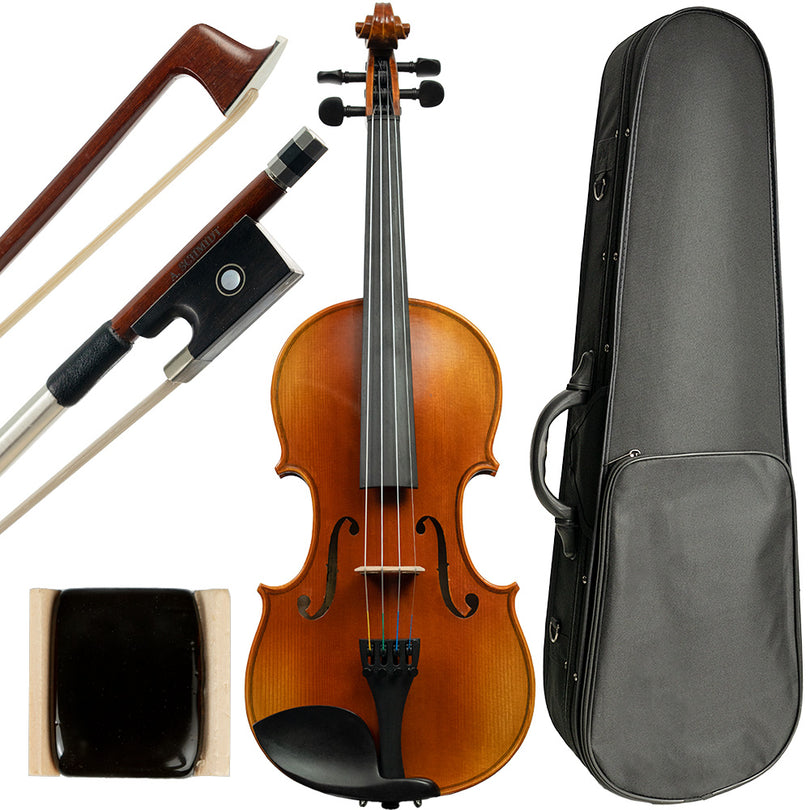
If you’re shopping for a first instrument, the Franz Hoffmann® Amadeus Violin Outfit is a dependable choice that arrives ready to play. For students setting up a home practice space, our Franz Hoffmann® Deluxe Outfits add useful extras like a music stand and a tuner-metronome. You can also browse our full violin collection to find the right instrument for any level.
Online, In-Person, or Both?
Many students find that a hybrid approach works best. Some start with in-person lessons to build a solid foundation, then switch to online lessons once posture and basic technique are secure. Others take regular online lessons with a specialist and schedule occasional in-person sessions with a local teacher for hands-on correction. Online lessons are also a great way to keep momentum going during travel, illness, or bad weather.
In the end, the right format is the one that keeps you motivated and progressing. Weigh the pros and cons above, ask prospective teachers how they run their online lessons, and don’t be afraid to try a few lessons before you commit.