



| Instrument | Measurement Method | Adult Size | Child Starting Size |
|---|---|---|---|
| Violin | Arm length (neck to mid-palm) | 4/4 (23") or 7/8 (22.5") | 1/32 to 3/4 |
| Viola | Arm length (neck to mid-palm) | 15.5" to 16" | 11" to 14" |
| Cello | Finger inch (index to pinky tip) | 4/4 (4.25") | 1/10 to 3/4 |
| Bass | Finger inch (index to pinky tip) | 3/4 (4.5") | 1/8 to 1/2 |
How to Measure for Violin Sizing
Violin sizing requires precise arm length measurement to ensure proper playing position and technique development. The standard method recommended by Shar Music involves having the player stand with their left arm fully extended, perpendicular to the body, with the shoulder relaxed[2]. First, extend the arm straight out to the side, parallel to the floor and in line with the shoulders. Next, move the arm forward so it forms a 45-degree angle to the shoulders. Turn the palm up toward the ceiling, and measure from the base of the neck (where it meets the shoulder) to the center of the palm.
- 1/32 size: 14" and under arm length (ages 5 years and under)
- 1/16 size: 14" arm length (ages 5 years and under)
- 1/10 size: 15" arm length (ages 4–5)
- 1/8 size: 16.5" arm length (ages 5–6)
- 1/4 size: 18.5" arm length (ages 6–7)
- 1/2 size: 20" arm length (ages 7–9)
- 3/4 size: 22" arm length (ages 9–11)
- 7/8 size: 22.5" arm length (ages 10+ and adults)
- 4/4 size (full): 23" arm length (ages 11+ and adults)
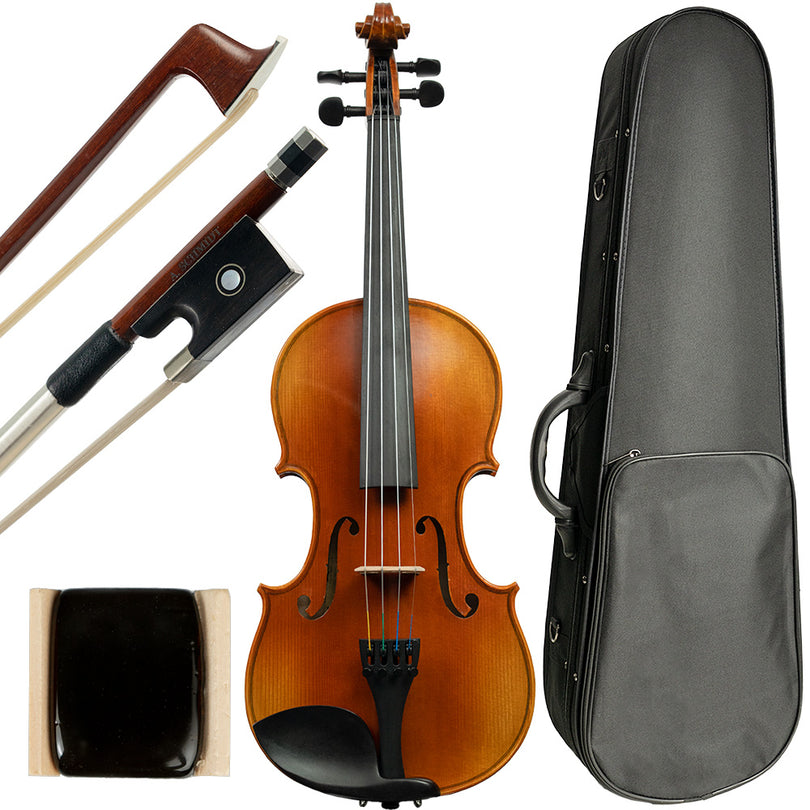
Shar Music offers complete violin outfits in all fractional sizes. When measuring children, remember that growth spurts may require re-sizing within 12-18 months.
Some adults with smaller hands or shorter arms (under 23" arm length) find 3/4 violins more comfortable than full-size instruments. Shar Music offers professional-quality 3/4 instruments suitable for adult players.
Viola Sizing: Understanding Inch Measurements
Unlike violins, violas use inch measurements rather than fractional sizing, ranging from 11 inches to 16.5 inches for adults. This measurement refers to the body length of the instrument. Viola sizing depends on arm length, but players must additionally consider hand size and finger span, as violas require greater reach between fingers due to their larger size and wider string spacing.
The measurement technique follows the same principle as violins: extend the left arm at a 45-degree angle with the palm up, and measure from the base of the neck to the center of the palm. However, viola players must also assess whether their hand can comfortably reach across the fingerboard and execute proper left-hand technique.
Viola Size Chart:
- 11 inch: 18" arm length (ages 5–7)
- 12 inch: 20" arm length (ages 6–7)
- 13 inch: 22" arm length (ages 7–9)
- 14 inch: 23" arm length (ages 11–13)
- 15 inch: 24.5" arm length (Small Adult or child 12–14)
- 15.5 inch: 25"–25.5" arm length (Average Adult)
- 16 or 15.5 inch: 26" or larger arm length (Large Adult)
Shar Music recommends that advancing players try multiple sizes within their range, as tone preference and playing comfort vary individually. Many professional violists choose 15.5" or 16" instruments for optimal resonance.
Cello and Bass Sizing by Finger Length
Cello and double bass sizing differs fundamentally from violin and viola. Instead of measuring the arm, sizing for these lower string instruments relies primarily on the player's hand span, measured in inches from the tip of the index finger to the tip of the pinky finger. While these instruments rest on the floor and overall posture matters, finger length ensures the player can comfortably execute proper finger placement and spacing on the thicker fingerboards.
- 1/10 size: 2.5" finger length (ages 3–4)
- 1/8 size: 2.75" finger length (ages 4–5)
- 1/4 size: 3" finger length (ages 5–6)
- 1/2 size: 3.25" finger length (ages 6–8)
- 3/4 size: 3.75" finger length (ages 11–13)
- 4/4 size (full): 4.25" finger length (ages 14+ and adults)
Bass Size Chart:
- 1/8 size: 3" finger length (ages 5–7)
- 1/4 size: 3.5" finger length (ages 7–9)
- 1/2 size: 4" finger length (ages 9–13)
- 3/4 size: 4.5" finger length (ages 13+ and adults)
Most adult bassists play a 3/4 size bass rather than a 4/4 instrument, as the 3/4 size provides the ideal balance of deep resonance and manageable fingerboard spacing for adult hands. Shar Music carries a comprehensive range of fractional and standard cello and bass sizes, complete with expert setup services to ensure proper string height, bridge placement, and endpin adjustment.
Common Sizing Mistakes to Avoid
One of the most common mistakes is relying solely on age recommendations rather than actual measurements. Children of the same age can vary dramatically in finger length and arm length, making age-based sizing unreliable. Shar Music emphasizes measurement-based sizing, using age ranges only as general guidelines.
FAQ
Q: Can adults play on 3/4 size violins or violas?
A: Yes, absolutely. Some adults with smaller hands or shorter arms find 3/4 or smaller instruments more comfortable than full-size options. Shar Music offers professional-quality fractional instruments suitable for adult players.
Q: How often should children be re-measured for instrument sizing?
A: It’s a good idea to re-check sizing regularly, especially during active growth periods or before the start of a new school year.
Q: What if my measurement falls between two sizes?
A: When an arm or finger measurement falls right between two sizes, younger students should generally size down. A slightly smaller instrument is much easier to handle and prevents physical strain. Advancing players, however, may choose to size up to achieve a fuller, more resonant tone, provided they can comfortably manage the physical reach. Shar Music's experts can provide personalized recommendations based on your playing level and goals.
Conclusion
Proper string instrument sizing forms the foundation for technical development, comfort, and musical enjoyment. By following the measurement guidelines in this guide and consulting Shar Music's detailed sizing charts, you can confidently select the right violin, viola, cello, or bass for yourself or your student.
References
[1] Shar Music. "About Shar Music - Our Story and Mission." https://www.sharmusic.com/pages/about-shar-music
[2] Shar Music. "How to Find the Right Size String Instrument." https://www.sharmusic.com/pages/how-to-determine-correct-instrument-size-violin-viola-cello-bass
[3] Shar Music. "Instrument Age & Size Charts." https://www.sharmusic.com/pages/instrument-age-size-charts