

If you've picked up a violin and thought, "Why does this feel so much harder than I expected?"—you're not imagining things. Violin has a reputation as one of the most challenging instruments to learn, especially for beginners, and there are real technical reasons why. The good news is that none of these challenges are impossible to overcome. With realistic expectations, consistent practice, and the right guidance, you'll make steady progress.
Let's look at what makes violin difficult—and why so many beginners stick with it anyway.
What Makes the Violin So Challenging for Beginners?
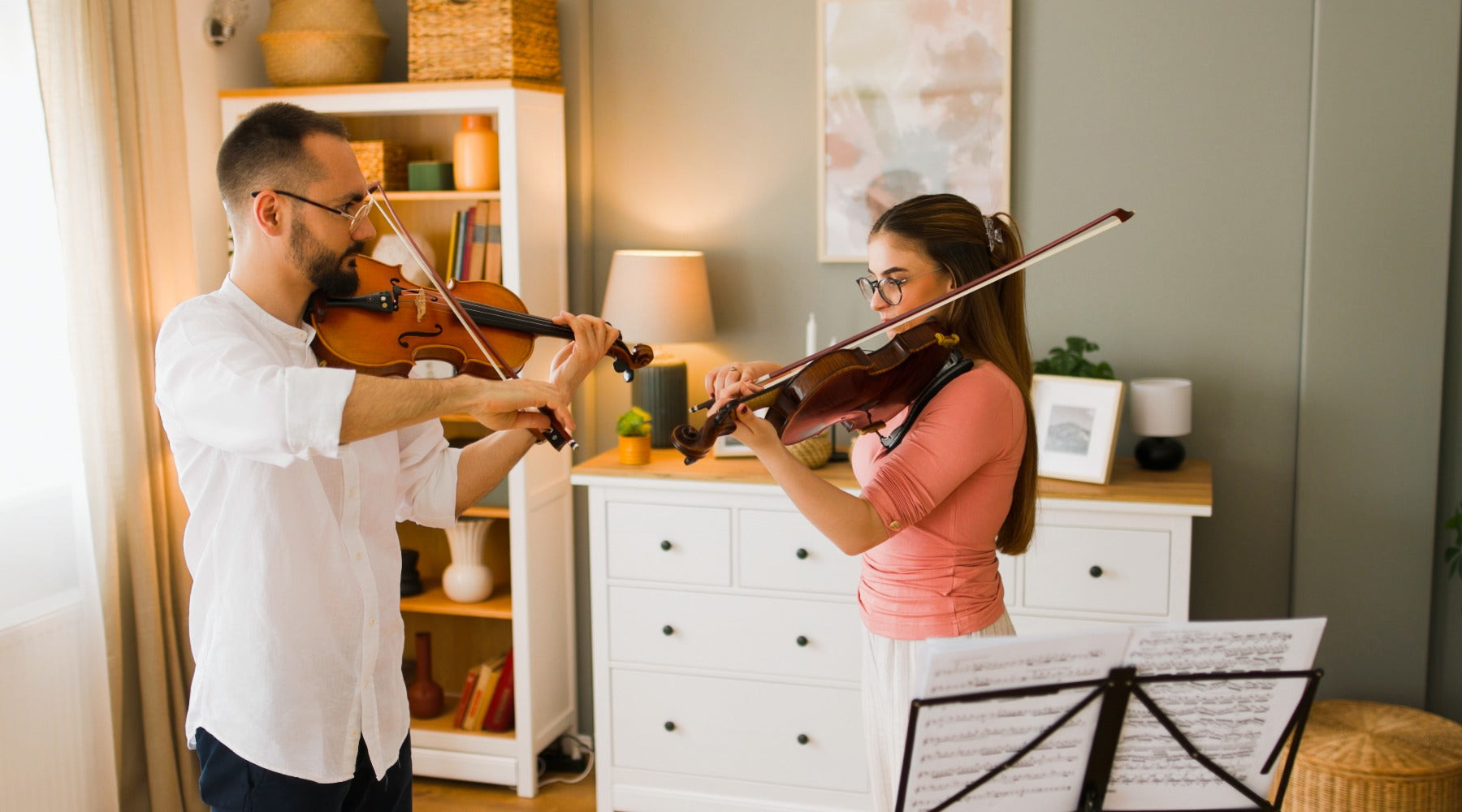
Learning violin is challenging because you're developing many new skills at the same time. First, there's posture. You have to balance the instrument comfortably between your jaw and shoulder while keeping your neck, shoulders, and arms relaxed—a combination that feels unnatural for most beginners.
Second, unlike guitar, violin has no frets to guide your fingers. Every note depends on precise finger placement, and even a tiny shift can make a note sound noticeably sharp or flat. This is why intonation is often one of the biggest hurdles for new players and requires intentional listening to control.
Third, the bow is responsible for both tone and volume. A slight change in bow speed, pressure, or angle can mean the difference between a warm, singing tone and a scratchy sound. At the same time, your left hand is finding accurate notes while your right hand controls the bow, creating a coordination challenge that takes time for your brain and muscles to develop.
On a subjective 1–10 difficulty scale, many musicians and teachers would rate violin around 7–8, compared with 5–6 for piano and guitar. Piano keys have each note in one position, while guitar uses frets to help players find accurate pitches. Violin asks you to create every note from scratch. It's a little like trying to pick up marbles with chopsticks for the first time—awkward and imprecise at first, but surprisingly natural once you've practiced enough.
The encouraging part is that no one needs perfect pitch to become a good violinist. Most successful players rely on relative pitch—the ability to hear relationships between notes rather than identifying them instantly. Relative pitch can be developed through simple interval exercises, listening practice, and playing along with a piano or tuner. In the long term, this develops more reliably and accurately the more one practices. Just keep in mind: practice alone doesn't guarantee progress—focused, attentive practice is what actually makes perfect.
Although violin can present a steep learning curve compared to many instruments, awareness of these challenges helps make them feel much more manageable. The next question most beginners ask is just as important: how long does it actually take before you start sounding like you're making real music?
How Long Does It Really Take to Learn Violin?
Unlike many articles that simply say "it depends," beginner progress follows a fairly predictable timeline when you practice consistently.
During the first three months, most beginners can learn proper posture, basic bow control, and simple melodies such as Twinkle, Twinkle, Little Star. While the tone may still be rough around the edges, you'll begin developing the coordination needed to play recognizable songs.
After six to twelve months of regular practice, many students complete Suzuki Book 1 or a similar beginner method. At this point, you'll likely feel more confident reading music, playing simple scales, and producing a noticeably cleaner sound.
By two to three years, many dedicated learners are ready to participate in beginner ensembles, community orchestras, church groups, or local music programs. While you won't sound like a concert soloist yet, you'll have built a solid technical foundation and be able to enjoy making music with others.
Adults often wonder whether they've started too late. Fortunately, the answer is always no. Adult beginners frequently progress faster than children in music theory, reading notation, and practicing with thoughtful intention. While physical coordination develops at a similar pace, adults usually make better use of limited practice time.
Practice consistency matters more than marathon sessions. Here's a realistic comparison:
| Daily Practice | Typical Progress |
|---|---|
| 20–30 minutes | Steady improvement and solid progress for most adult beginners. |
| 45–60 minutes | Faster technical development and more opportunities to build repertoire and confidence. |
Many beginners experience a plateau around months four to six. This is completely normal. Rather than meaning you've stopped improving, it often means your brain is organizing new skills behind the scenes. Recording yourself every few weeks is one of the best ways to notice progress that you may not hear day to day. Staying motivated during these slower periods is just as important as learning proper technique—and we'll come back to that later.
The Hidden Costs of Learning Violin (No One Talks About)
Learning violin involves more than simply buying an instrument. Planning for the full cost upfront helps prevent frustration and unexpected expenses later.
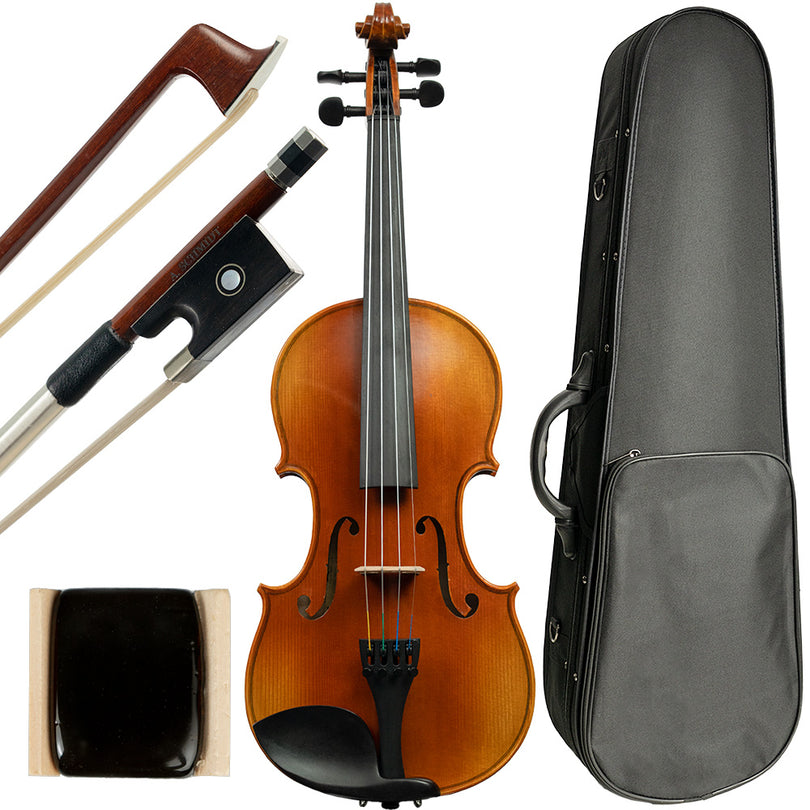
A quality beginner outfit—including the violin, bow, case, rosin, and shoulder rest—typically costs between $300 and $600. While cheaper factory-made violins can be tempting, they often have poor setup, making it unnecessarily difficult to play in tune or produce a pleasant sound. Many beginners assume they're struggling because they lack talent when the instrument itself is creating extra obstacles.
Beyond your first purchase, you'll also need to budget for replacement strings every 6–12 months (typically $20–$60), occasional maintenance and adjustments, and eventually upgrading to a better instrument as your skills improve. Many players also choose to rent a quality violin before purchasing, especially if they're unsure about making a long-term commitment.
Lesson costs vary throughout the United States. In many smaller communities, private lessons average $30–$50 per hour, while instructors in larger metropolitan areas may charge $80 or more. Many teachers and music stores offer discounted trial lessons, making it easier to find someone whose teaching style fits your goals.
Do you actually need a teacher?
Self-teaching is certainly possible using books, videos, and online resources, but beginners often develop posture, bowing, or hand-position habits that become difficult to correct later. Online courses offer an affordable middle ground, especially when combined with occasional feedback from an experienced instructor. One-on-one lessons remain the fastest way to improve because problems are corrected immediately before they become long-term habits.
When choosing a teacher, look for someone with a strong music background, several years of teaching experience, and experience working with adult beginners if that's your situation. A reasonable investment in quality instruction often saves both time and money in the long run.
Smart Strategies to Overcome the Biggest Beginner Struggles
Fortunately, the biggest beginner challenges all have practical solutions.
Train your ears every day. Match individual notes with a piano or keyboard and use tuning apps or a tuner to confirm your accuracy—not replace your listening skills. Over time, these exercises strengthen your relative pitch and make finding notes much more natural.
Build bow control slowly. Focus on long, straight bow strokes (best in front of a mirror) before introducing faster passages or string crossings. A beautiful tone comes from consistency, not speed.
Protect your body. Practice in front of a mirror to check your posture and bow control, schedule short breaks every 20–30 minutes, and stretch your neck and shoulders regularly. Many physical therapists who work with musicians recommend these simple habits to reduce tension and prevent overuse injuries.
Ease into performing. Performance feels different than practicing for yourself, so performing for other people can feel intimidating. To gradually increase your comfort level, start by performing for yourself, then a pet, a family member, or a trusted friend before joining a small group. Before you know it, you'll want to share your music with the world.
Learn to read music one step at a time. Instead of trying to sight-read entire pieces immediately, master a few measures at a time and build from there.
Many beginners also wonder whether they should follow the Suzuki Method or a more traditional approach. Suzuki emphasizes learning by listening and repetition before focusing heavily on reading music, which many students find motivating early on. Traditional methods introduce notation from the beginning and often appeal to adults who enjoy structured learning. Neither approach is universally better—the best choice depends on your learning style and goals.
One of the simplest ways to break through a plateau is by recording your practice sessions once a week. Listening back helps you notice improvements, identify recurring mistakes, and measure progress more objectively than relying on memory alone.
Staying Motivated When Progress Feels Slow
Almost every violinist experiences moments when progress seems to hit a wall. Fortunately, that's a normal part of learning—not a sign that you've reached your limit.
From a neuroscience perspective, your brain continues strengthening new motor skills even when visible progress slows. During these periods, you're often building coordination beneath the surface before seeing noticeable improvements.
One of the best ways to stay motivated is by becoming part of a community. Adult community orchestras, such as programs offered through the New Horizons International Music Association, provide supportive environments where beginners can learn alongside others at a similar stage. Online communities and YouTube channels like TwoSetViolin also remind new players that everyone struggles with squeaky notes, missed shifts, and frustrating practice sessions.
Instead of focusing on perfection, celebrate milestones. Recording your first complete song, learning your first scale, or performing for family are meaningful achievements that keep motivation high.
If you're transitioning from guitar or piano, you'll have advantages in rhythm, music theory, and reading notation. However, approach violin technique with a beginner's mindset. Every instrument develops different physical habits, and allowing yourself to learn slowly often leads to better long-term results.
Remember: slow progress is still progress. Every experienced violinist started with uncertain bow strokes and out-of-tune notes before developing the skills they enjoy today.
Ready to Start Your Violin Journey?
Yes, violin is one of the more challenging instruments to learn—but it's also one of the most rewarding. Every accomplished violinist once struggled with squeaky notes, awkward bow holds, and slow progress.
At Shar Music, we've helped thousands of beginners find instruments and accessories that make learning more enjoyable from day one. Choosing a properly set-up violin, quality strings, and the right accessories can remove many unnecessary frustrations and let you focus on developing your skills.
Whether you're searching for your first violin outfit, looking for advice on choosing a teacher, or simply want guidance from people who understand the beginner journey, we're here to help. Every great violinist started exactly where you are today—and your first step is all it takes to begin.
Shop Beginner Violins Explore Rental Options
Frequently Asked Questions
On a scale of 1 to 10, how hard is violin compared to guitar or piano?
Many musicians and teachers would rate violin around 7–8, compared with 5–6 for guitar and piano. The biggest differences are the fretless fingerboard, the need for precise intonation, and coordinating both hands independently.
How many months of practice before I can play "Twinkle, Twinkle, Little Star"?
Most beginners can play a recognizable version within 4–8 weeks of consistent practice, with cleaner tone and greater confidence typically developing during the first three months.
Do I absolutely need a violin teacher, or can I teach myself with online resources?
While self-teaching is possible, regular guidance from a qualified teacher helps prevent poor posture and technique from becoming long-term habits. Even occasional lessons can make a significant difference.
What's the total beginner budget I should plan for a decent violin setup in the US?
Plan on spending approximately $300–$600 for a quality beginner outfit, plus lesson costs, replacement strings, and occasional maintenance over time.
How do I stop sounding scratchy or like nails on a chalkboard?
Practice slow, straight bow strokes with consistent pressure and speed. Most scratchy tone comes from bow technique, not your left hand.
As an adult with a full-time job, how can I practice effectively in just 20–30 minutes a day?
Focus each session on one specific goal—such as intonation, bow control, or a difficult passage. Consistent, focused practice is far more effective than occasionally practicing for hours.
Will learning violin hurt my neck, shoulder, or back, and how can I prevent injuries?
Some muscle fatigue is normal initially, but proper posture, regular stretching, mirror practice, and scheduled breaks greatly reduce the risk of discomfort or injury. Immediately stop playing and take a break if playing becomes painful, as pushing through pain has the potential to make you develop poor habits.