

Ever wonder how we decide our sheet music difficulty ratings? Below you’ll find a detailed (and hopefully sane) explanation of how Shar Music rates the music we carry. Our system overlaps with the ratings used by the American String Teachers Association (ASTA). However, many of our sheet music titles aren’t rated by ASTA, so we developed our own scale to rate every title consistently.
Our scale runs from 1 to 6 and is grouped into three levels: Beginner (1-2), Intermediate (3-4), and Advanced (5-6). You can filter by these levels when you browse our violin music, viola music, and cello music collections. When a title lists a range, such as 1-2, the book or piece spans more than one level.
Beginner (1-2)

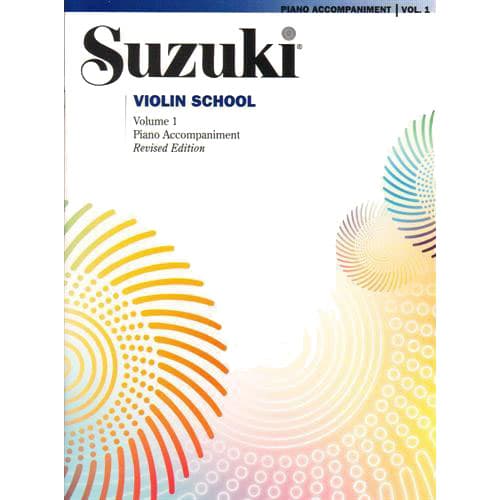
Beginner level repertoire stays in first position without rapid changes in finger placement. Rhythmic patterns are basic and simple, and bowings include detached strokes and simple slurs. Beginner music features easier key and time signatures, slow to moderate tempos, and simple accompaniments. Repertoire at this level generally corresponds with Essential Elements Books 1 and 2, as well as Suzuki Volumes 1, 2, and 3.
Repertoire rated “1” is technically simpler and appropriate for complete beginners. Repertoire rated “2” requires slightly higher technical skills, such as basic shifting, use of third position, slightly more complex rhythms, and different bowing patterns.
Intermediate (3-4)

Intermediate level repertoire builds fluency in the first three positions and begins exploring fourth and fifth positions (or thumb position for cello). Music at this level features varied bowing patterns and more advanced bow strokes such as spiccato and sautillé. Rhythmic patterns gain complexity with ties and syncopation. Key signatures are generally limited to four sharps or four flats, tempos range from slow to fast, and accompaniments become increasingly complex.
Repertoire rated “3” is similar in difficulty to Essential Technique for Strings, the third book in the Essential Elements series, and to pieces in Suzuki Volumes 4 and 5. Most pieces rated “3” don’t exceed three sharps or two flats in the key signature. Players will find that level “3” repertoire:
- demands more advanced bow technique with more frequent string crossings
- builds bow control through more frequent dynamic changes
- requires understanding of gradually more complex rhythms
Repertoire rated “4” is similar in difficulty to Advanced Technique for Strings, the fourth book in the Essential Elements series, and to pieces in Suzuki Volumes 6 through 8. Pieces rated “4” usually explore keys up to four sharps or flats. They use more advanced bow strokes such as spiccato, sautillé, or simple ricochet. Repertoire at this level may also include brief forays into higher positions (for example, sixth and seventh positions), double stops, and chords.
Advanced (5-6)

Advanced level repertoire makes use of all left- and right-hand techniques. It requires use of the entire fingerboard and complex bowing patterns with difficult string crossings. It also features more complex double stops, chords, and harmonics. Pieces at this level include a wide variety of articulations and may use extended techniques. Players will find key signatures with up to seven sharps or flats, as well as atonal music. Advanced music may also feature the most complex rhythms, mixed meters, and extensive dynamic contrast. Players are expected to have a mature musical understanding and the ability to interpret and express.
Repertoire rated “5” includes concertos and sonatas such as Bach’s solo works, Mozart’s violin concertos, Stamitz’s Viola Concerto, and the Boccherini and Saint-Saëns cello concertos. Repertoire rated “6” includes the most difficult works and requires mastery of all techniques and the highest level of musicianship. Examples include Paganini’s caprices, Brahms’s Violin Concerto, Hindemith’s viola sonatas, and the Dvořák and Schumann cello concertos.
Have a Question About a Rating?
Not sure which level is right for you or your students? Contact us and our team will be happy to help. You can also browse our full sheet music collection to find your next piece.