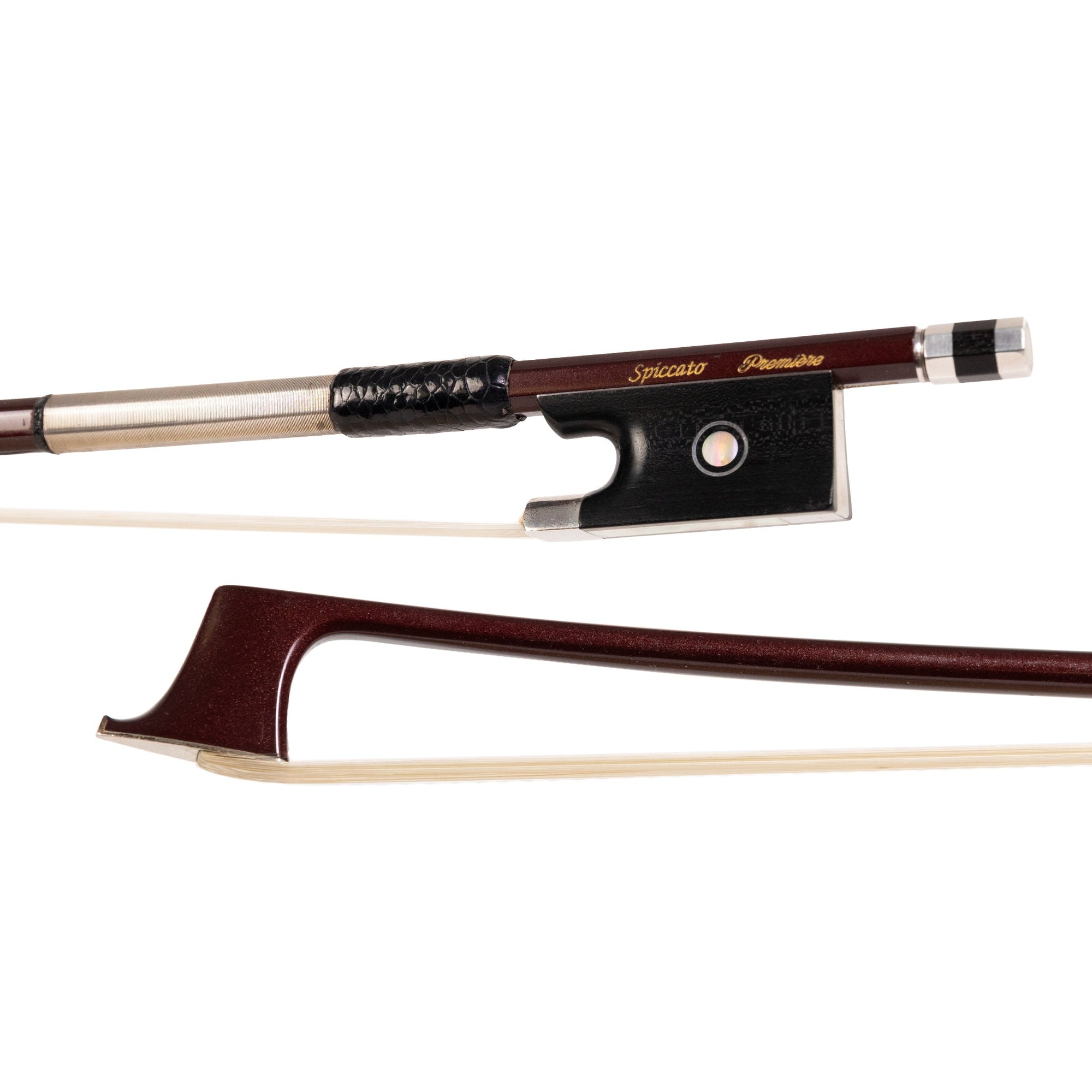
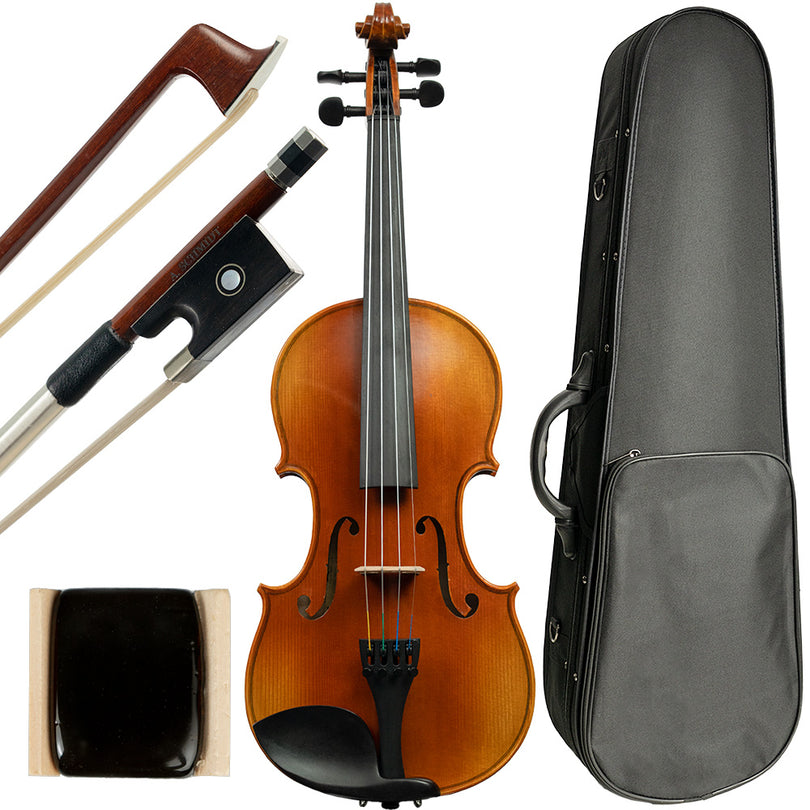
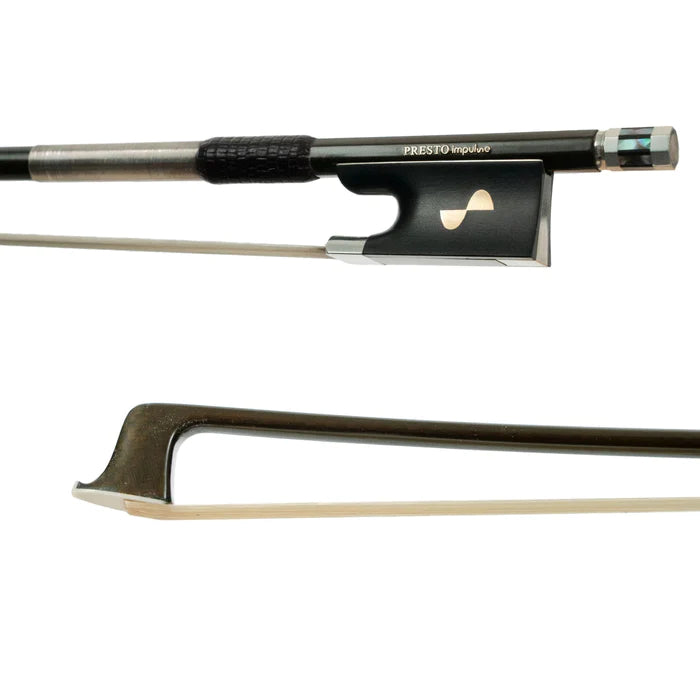

Choosing between Carlo Lamberti® and Franz Hoffmann® violins depends on where you are in your playing journey. Both brands at Shar Music serve distinct stages of student development. Franz Hoffmann® violins—including the Amadeus, Prelude, Danube, Vienna, Concert, and Maestro models—provide the ideal starting point for beginners, with six progressive models covering the first 3–5 years of study. Carlo Lamberti® instruments—featuring Sonata, Symphony, Classic, Master, and Tertis models—deliver warmer, more complex tones through aged tonewoods, serving as the natural step-up for intermediate students ready to advance beyond their beginner Franz Hoffmann® instrument.
This comparison examines tone characteristics, construction quality, and the natural upgrade path from beginner to intermediate performance.
At a Glance: Beginner vs Step-Up Violins
Franz Hoffmann® violins serve beginners through early intermediate students with six models prioritizing easy playability, bright projection, and forgiving response—perfect for students in their first 3–5 years of study[1]. Carlo Lamberti® violins offer aged tonewood sophistication for intermediate students ready to step up from Franz Hoffmann®, delivering the warmer, more nuanced tones required for advanced repertoire and orchestral performance[2].
Brand Positioning: Beginner to Intermediate
Franz Hoffmann®: The Beginner's Foundation
Franz Hoffmann® violins are purpose-built for beginners, providing six progressive models that support students from day one through early intermediate development. Designed by Shar Music to address the specific needs of students ages 6–16 in their first years of study, Franz Hoffmann® instruments prioritize ease of play, immediate tone production, and consistent quality at accessible price points[1]. The six-model range—Amadeus, Prelude, Danube, Vienna, Concert, and Maestro—allows students to progress within the same brand family as technique develops.
Target Student: First-time violinists through Suzuki Book 4–5 | Ages 6–16 | Students focused on foundational technique and school orchestra participation
Carlo Lamberti®: The Step-Up Choice
Carlo Lamberti® violins represent the natural upgrade for students who have mastered foundational technique on Franz Hoffmann® instruments and are ready for intermediate-level challenges. Each Carlo Lamberti® instrument uses aged European tonewoods (10–20 years) and undergoes individual tonal adjustment at Shar Music's Ann Arbor workshop[3]. The five-model lineup—Sonata, Symphony, Classic, Master, and Tertis—delivers the tonal complexity and expressive range necessary for advancing repertoire, auditions, and solo performance.
Target Student: Intermediate players advancing from beginner instruments | Suzuki Book 5+ | Students preparing for auditions, competitions, and advanced chamber music
Model Progression: Beginner Through Intermediate
| Stage | Franz Hoffmann® (Beginner) | Carlo Lamberti® (Intermediate) | Key Distinction |
|---|---|---|---|
| Early Beginner | Amadeus | — | First violin, immediate response |
| Beginner | Prelude | — | Year 1–2, forgiving playability |
| Advancing Beginner | Danube | — | Year 2–3, technique building |
| Early Intermediate | Vienna | Sonata | Step-up transition point |
| Intermediate | Concert | Symphony | Tonal complexity begins |
| Upper Intermediate | Maestro | Classic | Advanced ensemble work |
| Advanced Intermediate | — | Master | Pre-professional preparation |
| Pre-Professional | — | Tertis | Advanced solo repertoire |
Budget-Friendly Beginner Entry: Franz Hoffmann® provides accessible entry with the Amadeus and Prelude models, allowing families to start students on quality instruments without premium investment.
Step-Up Value: Carlo Lamberti® entry models (Sonata and Symphony) deliver aged tonewood benefits typically found in instruments costing significantly more, justifying the intermediate upgrade[2].
Tone Characteristics: Beginner Clarity vs Intermediate Complexity
Franz Hoffmann® Tone: Optimized for Beginners
Franz Hoffmann® violins produce bright, projecting tones with immediate response—designed to build confidence in beginning students who need consistent tone production without advanced bow control. The Amadeus and Prelude models feature select spruce tops that forgive inconsistent bow speed and pressure, critical during the first 2–3 years when students are developing basic technique[1].
Mid-range models like Danube, Vienna, and Concert introduce slightly warmer tones while maintaining the characteristic Franz Hoffmann® brightness and ease of play. Even the top Maestro model prioritizes immediate response over tonal complexity—perfect for beginners who need reliable sound production in group lessons and school orchestras.
Tonal Priorities: Bright clarity | Immediate response | Forgiving playability | Projection in group settings
Best for: Students ages 6–16 in years 1–5 of study, group lessons, school orchestras, chamber ensembles where penetration matters more than tonal sophistication.
Carlo Lamberti® Tone: Intermediate Sophistication
Carlo Lamberti® violins deliver warmer, more complex tones through aged European spruce and maple—designed for intermediate students whose technique can leverage nuanced tonal colors. The Sonata model introduces the richer harmonic content and subtle overtones that advancing students need for expressive phrasing in solo and orchestral repertoire[2].
Symphony, Classic, Master, and Tertis models progressively expand tonal palette with increasingly older wood (10–20+ years aged), producing the depth and complexity demanded by Romantic repertoire, advanced etudes, and concerto work. Players transitioning from Franz Hoffmann® immediately notice the singing quality, warmth without muddiness, and ease of expression that aged tonewoods provide.
Tonal Priorities: Warm complexity | Expressive range | Nuanced overtones | Solo/orchestral depth
Best for: Intermediate students (Suzuki Book 5+), audition preparation, competition repertoire, youth orchestra principal positions, advanced chamber music.
Construction: Student-Grade vs Step-Up Quality
Franz Hoffmann® violins utilize solid tonewoods with workshop construction optimized for durability and consistency at beginner price points. Shar Music ensures every Franz Hoffmann® instrument ships with professional setup including Dominant strings, properly fitted bridges, and correctly positioned soundposts[1]. Higher models (Concert, Maestro) add hand-carved details and premium fittings but maintain the beginner-focused playability philosophy.
Carlo Lamberti® violins emphasize aged tonewood selection and individual hand-finishing—the hallmark of step-up instruments. Each violin from Sonata through Tertis undergoes individual tonal adjustment and voicing at Shar Music's Ann Arbor workshop, a level of attention impossible at beginner price points[3]. Premium European maple and spruce aged 10–20 years provide the structural foundation for the complex harmonic development intermediate students require.
The Upgrade Path: When to Step Up
Signs You're Ready for Carlo Lamberti®
Students should consider upgrading from Franz Hoffmann® to Carlo Lamberti® when they exhibit these readiness indicators:
Technical Readiness:
- Consistent bow control with varied speeds and pressures
- Vibrato developing or established
- Playing Suzuki Book 5+ or equivalent repertoire
- Shifting comfortably to higher positions (5th position and above)
Musical Readiness:
- Expressing musical phrases beyond basic dynamics
- Frustrated by tonal limitations of beginner instrument
- Preparing for auditions, competitions, or solo performances
- Taking lessons with private instructor beyond group classes
Commitment Level:
- Practicing 45+ minutes daily
- Participating in youth orchestra or advanced ensemble
- Planning to continue violin through high school or beyond
- Ready for 5–10 year instrument investment
Recommended Upgrade Timeline
Year 1–2: Franz Hoffmann® Amadeus or Prelude for initial skill building
Year 2–4: Franz Hoffmann® Danube or Vienna as technique solidifies
Year 4+: Upgrade to Carlo Lamberti® Sonata or Symphony when reaching Suzuki Book 5 or equivalent technical level
Year 6+: Carlo Lamberti® Classic, Master, or Tertis for students advancing to pre-professional repertoire
Which Violin Should You Choose?
Choose Franz Hoffmann® If:
- Experience Level: You are a complete beginner or in your first 3–5 years of study
- Age: You are ages 6–16 starting violin or in early development
- Repertoire: You are working through Suzuki Books 1–4 or equivalent beginner/early intermediate material
- Use Case: Group lessons, school orchestra, beginner chamber music
- Playing Frequency: Practicing 15–45 minutes daily
- Future Plans: You may or may not continue violin long-term; want accessible entry without major investment
Choose Carlo Lamberti® If:
- Experience Level: You have 3+ years of experience and are ready to step up from your Franz Hoffmann® or similar beginner instrument
- Age/Level: You are intermediate student (any age) advancing to serious study
- Repertoire: You are working on Suzuki Book 5+ or equivalent intermediate repertoire with expressive demands
- Technical Skills: You have developed consistent bow control, shifting ability, and vibrato
- Use Case: Private lessons, youth orchestra auditions, solo competitions, advanced chamber music
- Playing Frequency: Practicing 45+ minutes daily with focused goals
- Future Plans: You are committed to violin for the foreseeable future and need an instrument supporting advanced development
The Hybrid Question: Franz Hoffmann® Concert/Maestro or Carlo Lamberti® Sonata?
Students at the transition point (around year 4–5, Suzuki Book 5) often ask whether to choose Franz Hoffmann® Concert or Maestro versus Carlo Lamberti® Sonata.
Choose Franz Hoffmann® Concert/Maestro if: You want to stay with beginner-focused bright tone and easy playability while maximizing quality within that category.
Choose Carlo Lamberti® Sonata if: You're ready for intermediate tonal complexity and warmer sound that will support advancing repertoire for the next 5–10 years. This is the recommended choice for most students making the step-up transition.
Try the Upgrade Path at Shar Music
Shar Music's in-home trial program allows side-by-side comparison of your current Franz Hoffmann® model alongside Carlo Lamberti® step-up options[4]. This in-home evaluation reveals whether you're ready for intermediate tonal complexity or should maximize your time on Franz Hoffmann® before upgrading. Many teachers recommend trying a Carlo Lamberti® instrument at home for a week before committing to the step-up investment.
FAQ
When should I upgrade from Franz Hoffmann® to Carlo Lamberti®?
Upgrade when you reach Suzuki Book 5 or equivalent (typically 3–5 years of study), have developed consistent bow control and shifting ability, and are working on repertoire requiring expressive tonal colors beyond beginner clarity[2].
Can beginners start on Carlo Lamberti® instruments?
While technically possible, it's not recommended. Carlo Lamberti® instruments require refined bow control to access their tonal complexity. Beginners benefit more from Franz Hoffmann®'s forgiving response and bright clarity, which build confidence during foundational years[1].
Is Franz Hoffmann® Concert comparable to Carlo Lamberti® Sonata?
They serve different purposes. Franz Hoffmann® Concert maintains beginner-focused bright tone and easy playability at the top of the beginner line. Carlo Lamberti® Sonata introduces intermediate tonal complexity through aged tonewoods. For students making the step-up transition, Carlo Lamberti® Sonata is the recommended choice[2].
How long will a Carlo Lamberti® violin last before needing another upgrade?
Carlo Lamberti® instruments typically support 5–10 years of intermediate through advanced development. Many students use Carlo Lamberti® Classic, Master, or Tertis models through high school and into college before considering professional-grade instruments.
Conclusion
Franz Hoffmann® and Carlo Lamberti® represent two essential stages in the violinist's journey. Franz Hoffmann® provides the perfect beginner foundation with six models covering the first 3–5 years of study, prioritizing ease of play and bright clarity that builds confidence. Carlo Lamberti® delivers the intermediate step-up with five models featuring aged tonewoods that provide the warmth, complexity, and expressive range necessary for advancing repertoire and serious musical development.
Ready to start your journey or make the step-up? Explore the complete Franz Hoffmann® beginner collection and Carlo Lamberti® intermediate range at Shar Music, or request a trial to experience the difference between beginner and intermediate instruments in your own practice space. Contact Shar Music's expert staff at 1-800-248-SHAR for personalized recommendations based on your current level and advancement goals.
References
[1] Shar Music, "Franz Hoffmann® Violins Collection," 2026. Beginner line featuring six progressive models: Prelude, Amadeus, Danube, Vienna, Concert, and Maestro. https://www.sharmusic.com/collections/franz-hoffmann-violins
[2] Shar Music, "Carlo Lamberti® Violins Collection," 2026. Intermediate step-up line featuring aged European spruce and maple construction: Sonata, Symphony, Classic, Master, and Tertis models. https://www.sharmusic.com/collections/carlo-lamberti-feature
[3] Shar Music, "About Us," 2026. "Every instrument receives professional setup and individual tonal adjustment at our Ann Arbor workshop." https://www.sharmusic.com/pages/about-shar-music
[4] Shar Music, "In-Home Trials," 2026. "Try instruments in your home before purchase." https://www.sharmusic.com/pages/in-home-trials
#FranzHoffmannViolins #CarloLambertiViolins #BeginnerViolin #IntermediateViolin #SharMusic #ViolinUpgrade #StepUpViolin