

Carbon fiber bows have captured approximately 35% of the professional bow market since 2020, challenging centuries of pernambuco wood tradition.[1] For string musicians navigating this choice, the decision extends beyond material preference to encompass tone quality, durability, environmental impact, and budget considerations. Shar Music, serving string musicians since 1962, offers both premium carbon fiber collections including PRESTO and CodaBow, alongside handcrafted wood bows from makers like Guy Laurent and Klaus Becker. This comparison examines the distinct characteristics of each bow type to help you make an informed decision aligned with your playing style and needs.
Carbon Fiber vs. Wood Bows
Carbon fiber bows deliver exceptional durability and consistency at $100-$2,000, while pernambuco wood bows offer warm, complex tones with prices ranging from $200-$10,000+.[2] Carbon fiber excels in extreme climates and travel scenarios, whereas wood bows provide nuanced tonal colors preferred by classical performers. Your choice depends on playing context, budget, and tonal priorities.
Watch Shar Music's expert comparison to hear the tonal differences between carbon fiber and wood bows:
Wood vs Carbon Fiber Bows - Which Is Better?
Material Comparison: Carbon Fiber vs. Pernambuco Wood
| Feature | Carbon Fiber | Pernambuco Wood |
|---|---|---|
| Durability |
Virtually unbreakable; resistant to warping[3] |
Susceptible to warping in humidity changes; requires careful maintenance |
| Tone Quality |
Bright, focused sound with enhanced clarity[4] |
Warm, rich tone with complex overtones[3] |
| Price Range |
$100-$2,000 (Shar Fusion starts at $89)[5] |
$200-$10,000+ (Klaus Becker Pernambuco from $254)[6] |
| Weight Consistency |
Uniform weight distribution; predictable balance[3] |
Natural variation; each bow unique |
| Climate Resistance |
Performs identically in all conditions |
Affected by temperature and humidity |
| Environmental Impact |
Sustainable manufacturing; no endangered species |
Pernambuco listed on CITES Appendix II since 2007[7] |
| Best For |
Students, traveling musicians, outdoor performances |
Classical soloists, orchestral professionals, collectors |
Carbon Fiber Bows: Modern Engineering Meets Performance
Durability and Consistency
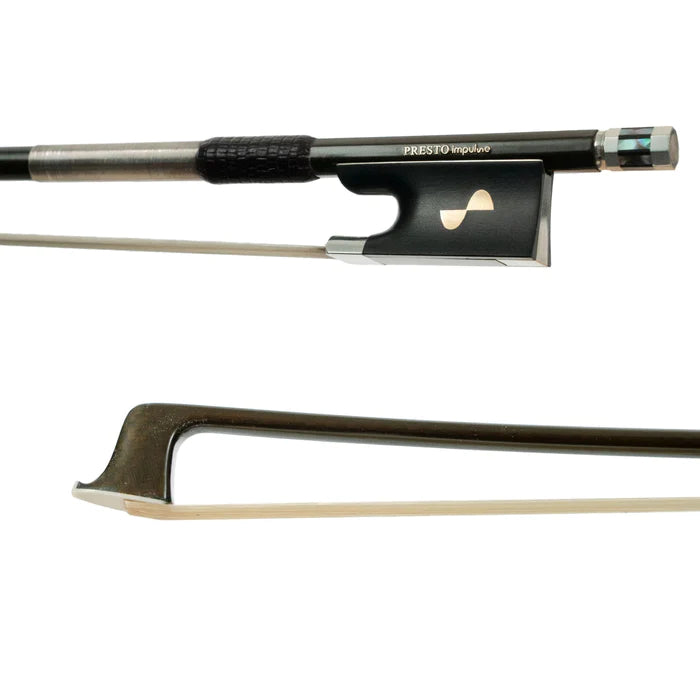
Carbon fiber bows eliminate the warping issues that plague wood bows, maintaining perfect straightness across extreme temperature and humidity variations.[3] Shar Music's PRESTO Impulse series uses aerospace-grade carbon fiber that eliminates "creep"—the gradual deformation that compromises bow performance over time. This engineering advantage makes carbon fiber bows ideal for musicians who travel frequently or perform in varying climates.
The manufacturing process creates uniform density throughout the stick, ensuring consistent weight distribution and balance point. Unlike wood bows where natural grain variations affect performance, every carbon fiber bow from the same production run performs identically. As noted by Violinist.com editor Laurie Niles, "Wood is extremely variable, but carbon fiber is not, so it's possible to make bows that are very consistent in weight, balance and feel."[3]
Tonal Characteristics
Carbon fiber bows typically produce a bright, focused sound that emphasizes clarity and articulation, with enhanced responsiveness for rapid passages.[4] The material's stiffness creates immediate bow response, making spiccato techniques and quick string crossings easier to execute. This tonal profile works exceptionally well for contemporary music, fiddle styles, and situations requiring projection in large venues.
Musicians report that high-quality carbon fiber bows like the Shar Music PRESTO Ovation deliver "big, clear tone and quick response" comparable to mid-range pernambuco bows at significantly lower price points.
Price and Value Proposition
Entry-level carbon fiber bows start at $89 for the Shar Fusion, while professional-grade options like the PRESTO Impulse retail for $399-$599.[2] This pricing structure provides exceptional value—a $500 carbon fiber bow often matches the performance characteristics of a $1,500-$2,000 pernambuco bow.
For students and intermediate players, carbon fiber eliminates the anxiety of damaging an expensive wood bow during the learning process. The investment protects against costly repairs while delivering professional-level performance.
Pernambuco Wood Bows: Traditional Craftsmanship and Tonal Complexity
Tonal Warmth and Overtone Richness
Pernambuco wood bows produce warm, complex tones filled with harmonic overtones that carbon fiber cannot fully replicate.[3] The natural cellular structure of pernambuco creates micro-vibrations that add depth and color to each note. Classical musicians particularly value this tonal complexity for expressive playing in solo and chamber music contexts.
Shar Music's collection includes handcrafted pernambuco bows from renowned makers like Guy Laurent and Klaus Becker, each offering distinct tonal personalities shaped by wood selection and maker expertise. The Klaus Becker Pernambuco Violin Bow, provides "responsive stick allowing advancing players to explore a wider range of bow technique."[6]
Craftsmanship and Individual Character
Each pernambuco bow represents hours of skilled handwork, from selecting premium wood with optimal grain patterns to precise shaping and balancing. Master bow makers evaluate density, flexibility, and resonance characteristics to create instruments with unique playing personalities.
This individuality means finding the right pernambuco bow requires trying multiple options to discover the perfect match for your instrument and playing style.
Environmental and Regulatory Considerations
Pernambuco wood (Paubrasilia echinata) has been listed on CITES Appendix II since September 2007, requiring documentation for international trade.[7] Recent regulatory discussions in 2026 considered moving pernambuco to Appendix I, which would have banned all international trade, though this proposal was ultimately rejected in favor of enhanced conservation measures.
Bow makers and conservation organizations now collaborate on sustainable pernambuco cultivation projects to ensure future supply. When purchasing pernambuco bows, verify that sellers provide proper documentation proving the wood was legally harvested.
How to Choose Between Carbon Fiber and Wood Bows
Consider Your Playing Context
Students and developing musicians benefit most from carbon fiber's durability and consistent performance during the learning phase. The forgiving nature of carbon fiber allows focus on technique development without worrying about damaging an expensive bow. Shar Music recommends carbon fiber options like the PRESTO Spark for students advancing beyond beginner-level equipment.
Professional classical musicians and soloists typically prefer pernambuco for its tonal complexity and expressive capabilities. The subtle color variations and overtone richness support nuanced interpretation in orchestral and chamber music settings.
Evaluate Your Budget
Carbon fiber delivers exceptional value in the $100-$600 range, often matching the performance of pernambuco bows costing 2-3 times more. If your budget is under $500, high-quality carbon fiber from makers like PRESTO or CodaBow provides better performance than entry-level pernambuco alternatives.
Above $1,000, pernambuco bows from established makers offer refinement and tonal characteristics that justify the premium pricing for serious musicians seeking ultimate expression.
Test Both Materials
The only definitive way to choose is playing both bow types on your instrument. Pay attention to bow response, tonal color, balance point, and how easily you can execute various techniques. The "right" bow feels like a natural extension of your arm and brings out your instrument's best qualities.
Maintenance and Longevity
Carbon fiber bows require minimal maintenance beyond regular hair replacement and cleaning, maintaining performance characteristics indefinitely.[3] The material does not warp, crack, or degrade with age, making it ideal for musicians who need reliable equipment without extensive care routines.
Pernambuco bows demand more attention. Store them in climate-controlled environments, loosen hair tension after playing, and monitor for warping or cracks. Proper care extends pernambuco bow life for decades, with many antique bows still performing beautifully after 100+ years.
Hybrid Options: Best of Both Worlds
Recent innovations combine carbon fiber cores with wood veneers or incorporate both materials in composite designs. These hybrid bows attempt to deliver carbon fiber's durability with wood-like tonal warmth. While promising, most professional musicians find that hybrids compromise rather than optimize both characteristics.
Which Bow Type Does Shar Music Recommend?
Shar Music carries extensive collections of both carbon fiber and pernambuco bows because each serves distinct musical needs. For students through intermediate players, carbon fiber options like the Shar Fusion or PRESTO series provide outstanding value and performance. Advanced students and professionals should explore both materials, selecting based on tonal preferences and playing context rather than tradition alone.
The company's expert staff assists musicians in finding the ideal bow match through personalized consultations and trial programs, ensuring every player discovers equipment that elevates their musical expression.
FAQ
What is the main difference between carbon fiber and wood violin bows? Carbon fiber bows offer superior durability and consistency with bright, focused tone, while pernambuco wood bows provide warm, complex sound with rich overtones. Carbon fiber resists warping and climate changes, whereas wood bows require careful maintenance but offer greater tonal nuance for classical performance.
Are carbon fiber bows good for professional musicians? Yes, high-quality carbon fiber bows from makers like CodaBow and PRESTO perform comparably to mid-range pernambuco bows and are increasingly used by professionals for travel, outdoor performances, and contemporary music. However, most classical soloists still prefer pernambuco for its tonal complexity in traditional repertoire.
How much should I spend on a carbon fiber vs. wood bow? Quality carbon fiber bows range from $100-$600, with professional options around $400-$600. Entry-level pernambuco bows start at $200-$300, while professional-grade pernambuco bows cost $1,000-$10,000+. A $500 carbon fiber bow typically matches the performance of a $1,500-$2,000 pernambuco bow.
Do carbon fiber bows sound different from wood bows? Yes, carbon fiber bows typically produce brighter, more focused sound with enhanced clarity, while pernambuco wood bows create warmer tones with complex harmonic overtones. The tonal difference becomes more pronounced in higher-quality bows of each material type.
Which bow type is better for students? Carbon fiber bows are generally better for students due to their durability, consistent performance, and lower cost. They eliminate concerns about warping or damage during the learning process while providing professional-level response. Shar Music's PRESTO and Shar Fusion lines offer excellent student-appropriate options starting at $89.
Conclusion
The carbon fiber versus wood bow decision ultimately reflects your musical priorities, playing context, and budget. Carbon fiber excels in durability, consistency, and value, making it ideal for students, traveling musicians, and those seeking reliable performance in varying conditions. Pernambuco wood offers unmatched tonal warmth and complexity for classical musicians prioritizing expressive nuance.
Shar Music's comprehensive bow collections ensure every musician finds the perfect match, whether that's the aerospace-engineered precision of a PRESTO Impulse carbon fiber bow or the handcrafted artistry of a Klaus Becker pernambuco bow. Explore both options through Shar Music's trial program to discover which material brings your musical voice to life.
Ready to find your perfect bow? Visit Shar Music's bow collection to explore carbon fiber and wood options, or contact their expert staff for personalized recommendations based on your instrument and playing style.
References
[1] Cognitive Market Research, "Carbon Fiber Violin Bows Market Analysis 2026," 2026. "This durability appeals to traveling musicians and students who require robust equipment." https://www.cognitivemarketresearch.com/carbon-fiber-violin-bows-market-report
[2] Shar Music, "Carbon Fiber Violin Bows: PRESTO, CodaBow, and More," 2026. https://www.sharmusic.com/collections/carbon-fiber-violin-bows
[3] Laurie Niles, Violinist.com, "V.com weekend vote: Do you prefer a wooden or carbon fiber bow?" October 18, 2019. "Wood is extremely variable, but carbon fiber is not, so it's possible to make bows that are very consistent in weight, balance and feel." https://www.violinist.com/blog/laurie/201910/27952/
[4] Music Industry How To, "15 Best Violin Bows 2026," 2026. "With a strong, bright tone, the bow features center-tip balance for extended range and electric instruments." https://www.musicindustryhowto.com/violin-bows/
[5] Shar Music, "Shar Fusion Carbon Fiber Violin Bow," 2026. https://www.sharmusic.com/products/shar-fusion-carbon-fiber-violin-bow
[6] Shar Music, "Klaus Becker® Pernambuco Violin Bow," 2026. "Excellent pernambuco bow, ideal for intermediate players." https://www.sharmusic.com/products/becker-pernambuco-violin-bow
[7] American Orchestras, "Pernambuco Policies and Conservation," Updated April 13, 2026. "The majority of fine bows used by musicians worldwide are made from Paubrasilia echinata (Pernambuco) wood." https://americanorchestras.org/pernambuco-exemption-and-conservation/
#CarbonFiberBow #WoodBow #ViolinBow #StringInstruments #PernambucoBow #SharMusic #BowComparison #MusicGear