



Why Violin Size Matters More Than Age
Age is the question every parent asks first, but it's the least reliable way to pick a violin size. Ten-year-olds vary enormously in height and arm length, so two students in the same fourth-grade class can easily need two different sizes. What actually determines the right fit is arm length, not birthday.
Playing on the wrong size violin causes real problems, and they tend to show up as technique issues long before anyone realizes the instrument is to blame. A violin that's too big forces a child to overextend their left arm to reach the scroll, which strains the shoulder and wrist and makes shifting between positions awkward and imprecise. It also pushes the bow arm out of a natural angle, so bow strokes end up short and scratchy instead of smooth. A violin that's too small isn't dangerous the same way, but it can hold a young player back once their hand grows, since the string length no longer matches their reach and shifting becomes cramped rather than natural.
There's a common instinct to size up early, buying a slightly bigger violin so a child can "grow into it" and delay the next purchase. Resist that instinct. A violin sized for where a child will be in a year is a violin that's wrong for where they are right now, and the resulting strain and awkward hand position can slow technical progress at exactly the stage when good habits are forming. It's far better to size correctly for today and plan on sizing up again as needed, which is a big part of why rental programs exist in the first place.
How to Measure Your Child for the Correct Size
The most reliable way to find the right size is a simple arm measurement, and you can do it at home in about a minute with a soft tape measure.
Have your child extend their left arm straight out to the side, parallel to the floor and in line with their shoulder. Next, have them angle that arm forward about 45 degrees, with the palm turned up toward the ceiling. Place the end of the tape measure at the base of the neck, right next to the left collarbone, and measure out to the center of the palm. That number is your sizing measurement.
Compare it to Shar Music's violin age and size chart:
- 22 inches: 4/4 (full size), typically age 11 and up, including adults
- 21 inches: 3/4, typically ages 9 to 11
- 19.25 inches: 1/2, typically ages 7 to 9
- 17.25 inches: 1/4, typically ages 6 to 7
- 15.5 inches: 1/8, typically ages 5 to 6
- 14.75 inches: 1/10, typically ages 4 to 5
- 13.5 inches: 1/16, typically age 5 and under
- 13 inches and under: 1/32, typically age 5 and under
If your child's measurement falls between two sizes, choose the smaller one, not the larger one. A slightly smaller violin is easy to play and won't cause strain, while a violin that's even a little too large can create the reaching and overextension problems described above. This rule matters more than it might seem, since the temptation to round up is strong when a birthday or a growth spurt feels close.
If you'd rather not measure at home, any specialty string shop can do this for you in a couple of minutes, and Shar Music's violin size and age chart is a helpful visual reference to check your measurement against.
What Size Does a 10-Year-Old Usually Need?
Most 10-year-olds fall somewhere across two sizes: 3/4, or, for taller kids, a full 4/4. Using the arm measurement above, a child measuring around 21 inches from neck to palm fits comfortably in a 3/4 violin, while a child closer to 22 inches is ready for full size. Because the gap between these two sizes is narrow, it's worth measuring carefully rather than guessing, since a child near the boundary can end up in an uncomfortable fit either way.
There's real variation here, and that's normal. A smaller-framed 10-year-old might still be playing a 1/2 size, especially if they started lessons only recently and haven't had years of growth to catch up on an earlier size. A tall, long-armed 10-year-old might already be in a full 4/4, which is less common at this age but not rare. Neither situation is a problem. The arm measurement, not the age on a birth certificate, is what determines the right call, and a good string teacher or shop will always defer to that measurement over a general age guideline.
This is also the age range where a lot of families start seeing real jumps in growth, so a violin that fits perfectly this fall might feel slightly cramped by next spring. That's worth planning for rather than being surprised by, especially with a violin at the 3/4 size, since the next step up is a full-size instrument that will likely last through the rest of a child's playing life.
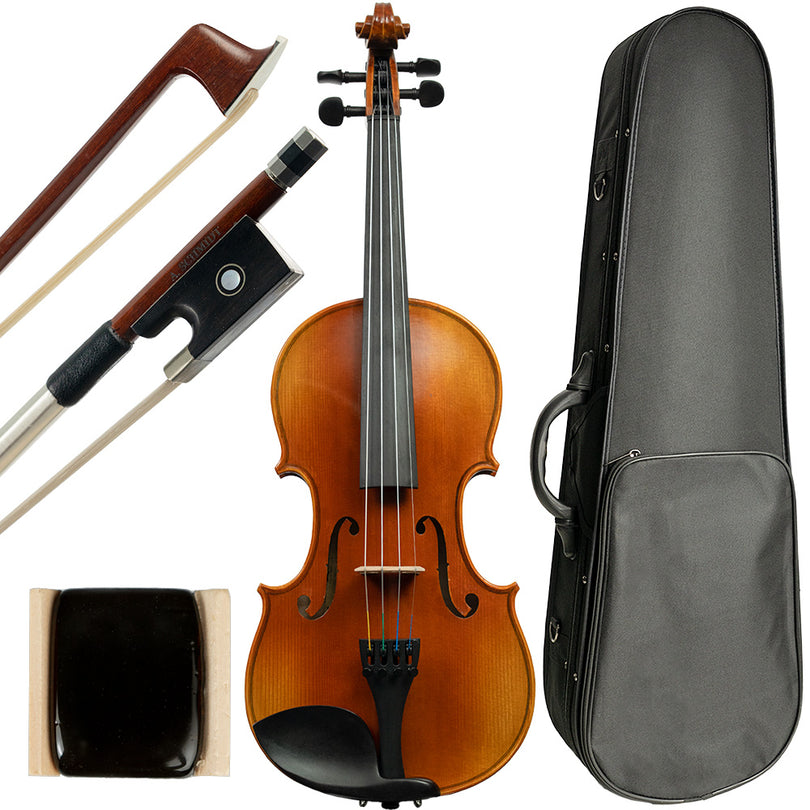
For a 3/4 size student ready for a more advanced instrument, families often look for a violin that offers improved tone, response, and craftsmanship while still being comfortable for a growing player. The Franz Hoffmann Danube and Franz Hoffmann Concert are both available in 3/4 and other fractional sizes and are popular choices for students at this stage. For a child who has already reached full size, the beginning violins collection covers the same models in 4/4.
Signs Your Child's Violin Is the Wrong Size
Even with a careful measurement, it's worth watching for signs that a violin no longer fits, since kids grow unevenly and don't always mention discomfort on their own.
Signs the violin is too big: your child's left elbow has to swing out and away from their body to reach the fingerboard, their wrist bends at an unnatural angle to reach higher positions, or they seem to be "hugging" the violin with a raised shoulder to keep it in place. Watch the scroll, too. If your child has to stretch their fingers noticeably to reach the first position notes, or their hand looks strained rather than relaxed, the violin is likely too large for them right now.
Signs the violin is too small: the violin looks noticeably short against their body when they hold it in playing position, their bow arm feels cramped rather than extended, or they've clearly grown taller and longer-armed since the last time you checked their measurement. A student who has gone from struggling to reach the upper positions to playing them with room to spare has probably outgrown their current size.
If you notice any of these signs, it's worth remeasuring rather than guessing. A quick arm measurement takes far less time than the technique problems a poor fit can cause. If you're still unsure, ask your child's violin teacher or a string shop professional to check their playing position. They can often spot sizing issues by looking at posture, hand position, and overall comfort while the student plays.
Handling the Growth Years: Why Renting Makes Sense at This Age
Ten is right in the middle of the sizing years for most students, which makes this an awkward age to buy outright. A violin bought today might only fit for six months to a year before another size change is needed, and buying a new instrument every time a child grows gets expensive fast.
This is exactly the situation rental and rent-to-own programs are built for. Shar Music's SharWay program builds equity toward a full-size instrument as a student grows, so a size exchange along the way doesn't mean starting over financially. Michigan families also have access to a local rental program with sizing built into the plan. Either route means a growth spurt becomes a quick size exchange rather than a whole new purchase.
Ready to Find the Right Size?
Getting the size right matters more than almost any other decision in a young violinist's first few years, and it's a five-minute measurement, not a guessing game. Measure your child's arm length using the method above, compare it against the chart, and when in doubt, size down rather than up.
If you'd like a second opinion before committing to a size, our team is happy to help. Browse our full range of beginning violins in every fractional size, or reach out and we'll help you find the right fit for your student.
FAQ
What size violin does a 10-year-old typically need?
Most 10-year-olds play a 3/4 size violin, though taller kids with longer arms may already be ready for a full 4/4 size. Age alone isn't a reliable guide since children grow at different rates, so an arm length measurement gives a much more accurate answer than birthday alone.
How do I measure my child for a violin size?
Have your child extend their left arm out to the side and angle it forward about 45 degrees with the palm facing up. Measure from the base of the neck, at the collarbone, to the center of the palm, then compare that number to a standard violin sizing chart to find the right fit.
Can a 10-year-old play a full-size (4/4) violin?
Yes, if their arm measurement supports it. A child measuring around 22 inches from neck to palm is ready for a full-size violin regardless of age, though many 10-year-olds land in the 3/4 size just below it. Full size is less common at 10 than at 12 or older, but it isn't unusual for taller kids.
What happens if a violin is too big for a child?
A violin that's too large forces the left arm and wrist into strained, unnatural positions to reach the fingerboard, which can slow technical progress and lead to physical discomfort. It's always better to size down rather than size up when a measurement falls between two sizes.
How often will my 10-year-old need a new size?
It varies by child, but this age often falls in the middle of the fastest growth years for sizing changes, so a violin bought today might need to be exchanged for a larger size within six months to a year. Rechecking the arm measurement every few months is a good habit during these years.
Should I rent or buy at this age?
Renting or using a rent-to-own program is usually the better choice for a 10-year-old, since it allows for a quick size exchange as they grow without the cost of buying a brand-new instrument each time. Buying outright makes more sense once a student reaches full size and growth-related sizing changes are no longer a concern.


