

Choosing a violin bow is not just a matter of finding the right price tag. The bow you play with shapes your tone, your control, and even how quickly you progress as a player. Whether you are upgrading from a rental bow or shopping for a professional stick, understanding what makes a bow perform the way it does will help you make a confident, informed choice.
Understanding Bow Materials: Brazilwood, Pernambuco, Carbon Fiber, and More
A bow's material affects how efficiently it transfers energy from your hand to the string, but density is only part of the equation. The wood's stiffness, elasticity, and grain structure all influence how quickly the bow responds, how it handles pressure, and how it shapes the instrument's tone. A well-balanced combination of these qualities helps create everything from a warm, rounded sound to a brighter, more focused response.
Pernambuco has been the traditional gold standard for over two centuries because of its rare combination of stiffness, flexibility, and resilience. However, pernambuco is a CITES protected species due to overharvesting, which has made responsibly sourced sticks harder to find and often more expensive. Brazilwood, a related but less dense species, offers a similar feel at a fraction of the cost and is common in beginner and student bows. For players seeking a sustainable alternative with genuine tonal character, Ipe wood is worth exploring in Arcos Brasil's Ipe wood bow collection.
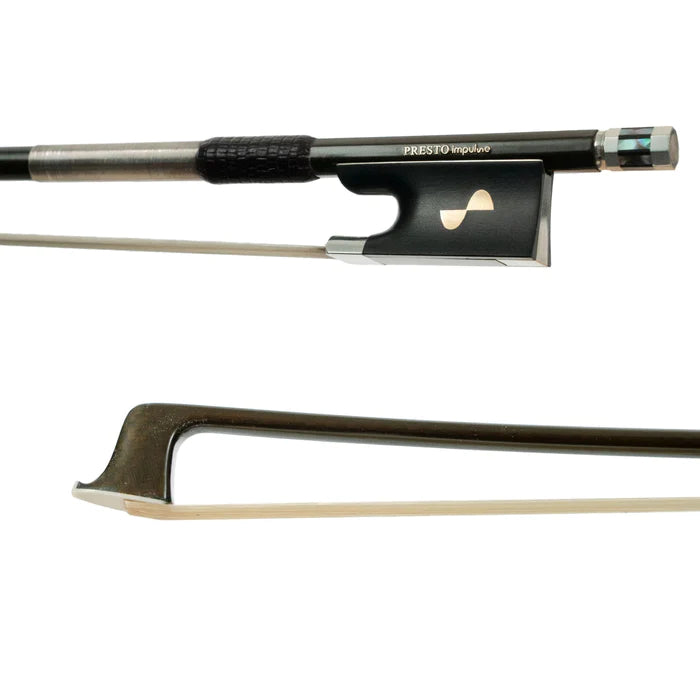
Carbon fiber has become a serious contender at every level. Because it is engineered rather than grown, it delivers remarkable consistency from stick to stick and holds up well to temperature and humidity swings, which makes it a smart choice for students who travel to lessons, rehearsals, or outdoor performances throughout the year. It also tends to be far more resistant to warping and breakage than wood, which matters for students who are still learning to handle their instrument with care. Explore Shar's full carbon fiber violin bow collection to compare options across price points and brands.
Fiberglass bows are another common option, especially for young beginners and rental instruments. They are highly durable and affordable, making them practical for students who are still learning basic bow handling. While they typically do not offer the same responsiveness, flexibility, or tonal complexity as quality wood or carbon fiber bows, they can be a reliable starting point for new players.
Anatomy of a Bow: Stick, Frog, Hair, and Balance
Every bow is built from the same core parts, but small design choices in each one change how the bow feels in your hand. The stick itself is usually round or octagonal in cross section. Octagonal sticks are generally stiffer, producing a more focused, articulate tone, while round sticks flex more and tend to create a warmer, slightly more flexible response. The difference is not simply about shape. The quality of the wood, the craftsmanship, and how the stick is graduated all influence the final sound and feel.
The frog, located at the base of the bow, houses the screw mechanism that adjusts hair tension, and its weight contributes meaningfully to the bow's overall balance. The winding, wrapped just above the frog, adds grip and can help fine tune the weight distribution in the player's hand. The hair itself, typically horsehair, grips the string to produce sound and gradually loses its ability to create friction with regular use.
Bow size matters just as much as material. While bow size is usually matched to the violin size, players should choose a bow that allows comfortable control and natural movement. As a general reference:
- 1/16–1/10 size: Ages 3–5
- 1/8 size: Ages 5–6
- 1/4 size: Ages 6–7
- 1/2 size: Ages 7–9
- 3/4 size: Ages 9–11
- 4/4 (full size): Age 11+ and adults
Adults with smaller hands or shorter fingers may also find a lighter stick more comfortable to control, even at full size, so it is worth trying a few weights rather than assuming a standard bow is the right fit.
Test-Driving a Bow: Stroke Articulations and What to Listen For
A bow can look and feel great sitting in your case and still disappoint once you start playing. Testing specific strokes tells you far more than a quick scale ever will. Try a spiccato passage to feel how easily the bow bounces and recovers between notes. Play a slow, sustained legato line to listen for smoothness and evenness as you change bow direction. Then try a staccato passage to check how cleanly the bow starts and stops each note.
While you play, watch the stick from the side. It should track straight without wobbling or curving unexpectedly under pressure, even when you lean into a louder passage. Also test tone across all four strings, since a bow that sounds rich on the G string but thin on the E may not be the right match for your instrument. Pay attention, too, to how quickly the bow responds when you start a note from stillness. A bow with good response lets you begin a phrase precisely where you intend, without a delay or a scratchy attack.
Because bow and violin pairing matters so much, always bring your own instrument when testing bows rather than relying on a shop's demo violin. The same bow can sound completely different on two violins, so testing on an unfamiliar instrument tells you very little about how it will actually perform for you. If visiting a shop in person is not practical, Shar's In-Home Trial program lets you try up to four bows on your own instrument, in your own space, before committing to a purchase.
Finding Your Perfect Weight and Balance Point
Most violin bows weigh somewhere between 58 and 62 grams, but the ideal weight depends on your body and playing style. Players with smaller hands or shorter arms often find more control with a lighter bow, around 54 to 56 grams, while soloists who need extra volume and projection sometimes prefer a heavier stick in the 63 to 65 gram range.
Balance point matters just as much as total weight. To find it, rest the bow across a fingertip or pencil near the frog and slide it until the bow balances horizontally. A bow that balances closer to the frog often feels easier to maneuver because less weight is carried toward the tip. A bow with more weight toward the tip can create stronger projection but may require more control from the player. Neither is objectively better, since the right balance depends on your repertoire and technique.
Many teachers describe the bow as an extension of the arm, and this is more than a figure of speech. When weight and balance suit your body, the bow responds to small movements in your fingers and wrist rather than requiring effort from your whole arm, and that connection is what allows for nuanced dynamics and clean articulation. If a bow ever feels like you are fighting it to produce a clear sound, weight or balance point, not your technique, may be the actual issue.
Navigating Price Ranges and Making a Confident Purchase
Violin bows span a wide price range, and knowing what to expect at each tier makes shopping much less overwhelming. Student bows under $100 are typically brazilwood or basic fiberglass, built for durability during the early years of learning. Intermediate bows, generally $200 to $800, introduce better balance and responsiveness in materials like higher grade brazilwood or entry level carbon fiber, such as options in Shar's violin bow collection. Professional bows starting around $900 and up include premium carbon fiber sticks like the CodaBow Diamond GX and fine pernambuco bows such as the JonPaul Carrera, both built for advancing and professional players.
If you are considering a used bow, check the stick carefully for warping, cracks near the tip, and a frog that fits securely, and budget for a rehair since you rarely know the true playing condition of the hair beforehand. It is also worth asking about the bow's history and any past repairs, since a well documented used bow from a reputable seller carries far less risk than one bought without any background.
Whatever your budget, remember that the best bow is the one that pairs well with your specific violin, not simply the one with the highest price tag. A well matched $500 bow can outperform a $2,000 bow on the wrong instrument, which is exactly why trying before buying matters so much. Let your ears, and your teacher's ears if you have one, guide the final decision rather than the number on the price tag alone.
Next Steps to Find Your Ideal Bow
The only real way to know if a bow is right for you is to play it, ideally on your own violin. If you are near Ann Arbor, stop by our shop to test bows in person with help from our specialists. If not, our In-Home Trial program brings the shop experience to you, with up to four bows shipped for a 10 day trial. Take your time, trust your ears, and choose the bow that makes your playing feel effortless.
FAQ
How often should I rehair my violin bow?
Most players rehair every six months to a year, depending on how often they play. Signs it's time include hair that feels slippery, has visibly thinned, or no longer grips the string evenly. Shar's repair and restoration services offer professional rehairs using high quality hair for consistent, balanced tone.
What are the advantages of carbon fiber bows over traditional wood?
Carbon fiber bows offer greater consistency from bow to bow, hold up better to temperature and humidity changes, and typically cost less than comparable wood bows at the same performance level. Browse Shar's carbon fiber violin bow collection to compare top brands.
Is a lighter or heavier bow better for a beginner violinist?
Lighter bows are generally easier for beginners to control, especially younger students or those with smaller hands, since they require less arm strength to maneuver. As technique develops, players often become more specific about the weight and balance that best matches their playing style.
How can I check if a bow is straight and free of warps?
Hold the bow at eye level and look down the length of the stick from tip to frog. It should appear straight with no visible curve to either side. You can also tighten the hair slightly and check that the stick doesn't twist or lean when light pressure is applied.
What are some good alternatives to pernambuco wood?
Brazilwood is the most common and budget friendly alternative, while Ipe wood offers a sustainable option with strong tonal qualities. Explore Shar's Ipe wood bow collection from Arcos Brasil for a closer look.
How does the bow affect the tone quality of my violin?
The bow transfers energy from your hand to the string, so its weight, balance, flexibility, and material all shape how clear, warm, or powerful your sound is. A bow that pairs well with your specific violin can noticeably improve tone even without changing the instrument itself.
Can I use a smaller bow if I have small hands or short arms?
Yes. While bow size is usually matched to violin size rather than hand size, adults and older students with smaller hands can benefit from trying lighter weight full size bows or exploring options in Shar's beginner violin bow collection, which includes lighter weight choices well suited to smaller frames.


