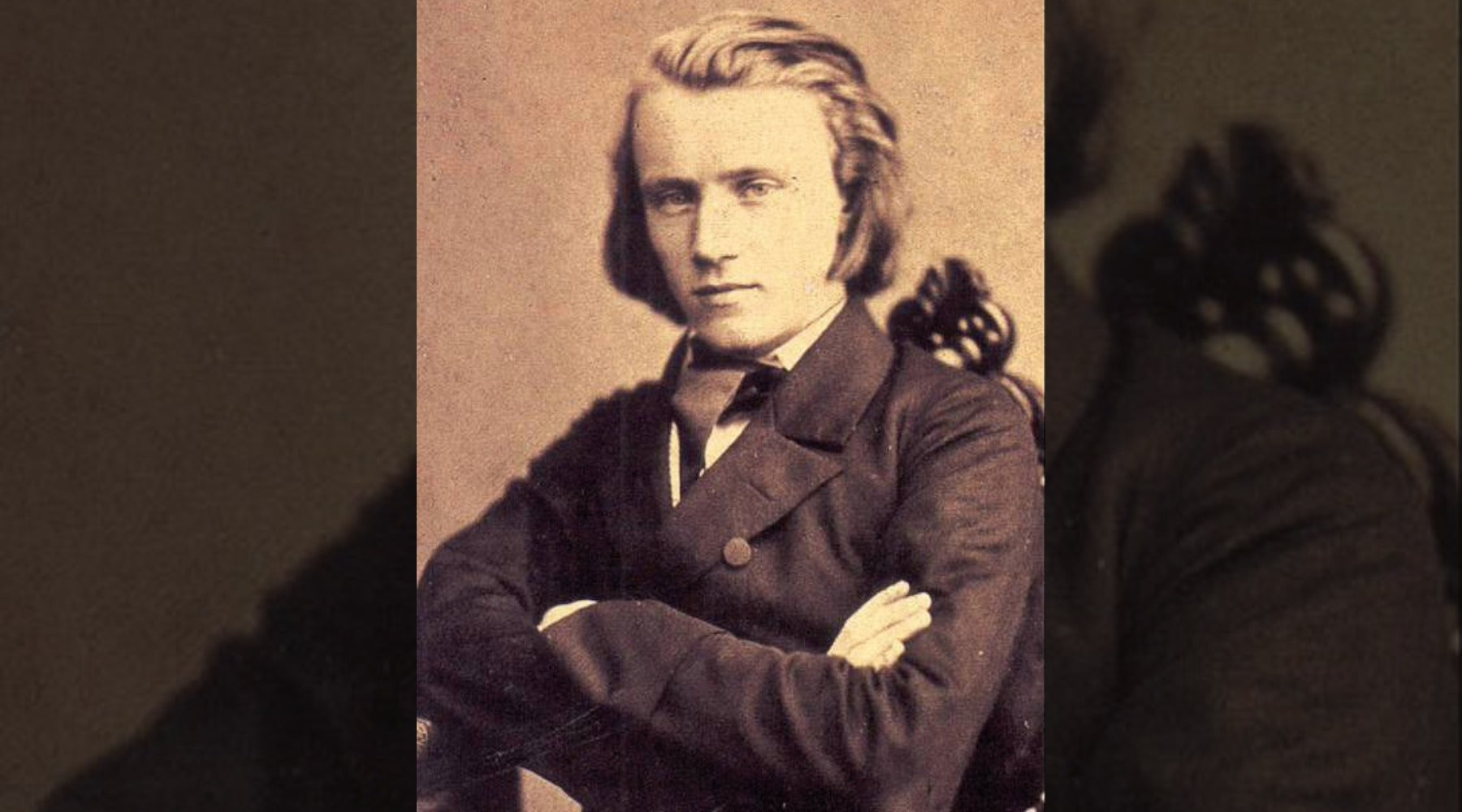




Bad behavior and classical musicians go way back. Long before reality TV made drama-among-artists into a genre, real composers were living out plots wilder than anything on stage. Here's a brief look at Giacomo Puccini's love life. Puccini didn't just write opera; he lived it.
The famed Italian composer Giacomo Puccini was known for churning out fabulous operas in the verismo style. We could go on and on about La Boheme, or wax poetic about the iconic melodies in Madama Butterfly, or detail how his critics viewed his music. Or we could cut to the chase and tell you what you're obviously dying to know: the shocking details of his love life.
And let me tell you, it is shocking indeed, especially for the late 1800s and early 1900s.
So the story goes like this. Once upon a time, in the fall of 1884, Puccini fell in love with a lady named Elvira Gemignani in Lucca, Italy. Minor issue: Elvira was married to another guy named Narisco Gemignani, who was Puccini's old schoolfriend. But Puccini probably thought his lady's marital status wasn't that big of a deal, because Narisco was a ladies' man himself and the Gemignanis were not happily married. So Elvira and Puccini pursued their relationship and Elvira became pregnant. This really disappointed Puccini's sisters, one of whom was a nun, and brought disgrace and scandal to the conservative, small town of Lucca. Elvira's husband Narisco became enraged at their affair (double standard, anyone?) and threatened them so often that they had to keep their location a secret. In 1886, she went into hiding when the pregnancy started to show and gave birth somewhere outside of Lucca to a son, Antonio. Shortly thereafter, Elvira moved in with Puccini, bringing along her daughter Fosca from her previous marriage to Narisco Gemignani.
They should have had the embodiment of quiet family life, right? With Elvira, Puccini, and two children settled down in a small town? But this was not to be the case. Elvira had evolved into a nagging, jealous, slightly unstable partner. We shouldn't blame her too much, because Puccini fell for another woman. In 1900, he had philandering eyes for a young lady named Corinna (our sources said that her last name and exact age are unknown). Puccini instantly fell for Corinna and they began an illicit affair. Elvira did her best to stop Puccini from seeing her, even throwing temper tantrums and going on hunger strikes. Eventually, Puccini got caught red-handed. He had told Elvira that he was going "hunting," when in fact he was on his way to pay Corinna a visit. Elvira suspected that he was lying and decided to follow him, catching Corinna in a carriage on her way out of town. She ran to Corinna and started assaulting her with her umbrella; the carriage whipped away to avoid Elvira and her antics and she ended up in a ditch. She raced Puccini home and made it there before he did. When he arrived home from his "hunting" trip, she proceeded to confront him, mostly with her fists and fingernails. When he had scratches all over him the next day, he shrugged it off by saying that he fell into a bramble bush, but nobody seemed to believe that.
Remember, all these years Elvira is still married to her husband Narisco, but living with Puccini. Instead of Elvira divorcing Narisco, it so happened that in February 1903 he got killed. Narisco was supposedly killed by the husband of a woman he had been having an affair with. How convenient. This paved the way for Puccini and Elvira to marry. After Narisco Gemignani died, Puccini's sisters (especially the nun, Iginia) begged him to marry Elvira and legitimize their son, Antonio. Perhaps because Elvira wasn't the most stable partner ever, Puccini wasn't really into this idea. To complicate matters further, Corinna and Puccini had a few fights, partly because Corinna was seeing someone else on the side. Puccini sent her some scathing letters, and Corinna threatened to sue for false promises. Eventually, after being with Elvira for nearly eighteen years, Puccini gave in, paid off Corinna to make her go away, and signed on the dotted line to marry Elvira. They were married on January 3, 1904, a week after Puccini finished Madama Butterfly and after the ten months of Elvira's legal widowhood were complete. "Iginia will be glad," Puccini wrote.
However, getting married hardly solved their issues. Their marriage definitely had trust issues. Puccini continued to cheat, mostly with well-known singers. His infidelity would eventually include dalliances with Maria Jeritza, Emmy Destinn, Cesira Ferrani, and Hariclea Darclee. For Elvira's part, marriage didn't seem to help her chill out much either. Her jealousy and mistrust of Puccini were as apparent as ever. She would go through his belongings, accuse him of betrayal, follow him wherever he traveled, and read his letters. In general, she kept close tabs on him almost constantly.
We wish we could end this story here, but alas, there is more. The Puccini family was wealthy enough to employ a maid to help around the house. The maid was named Doria Manfredi. In September 1908, Puccini sent word that he was returning to his villa in Torre del Lago and asked Doria to open up and prepare the house for him. In doing so, Doria accidentally discovered Puccini's stepdaughter Fosca (Elvira's daughter) at the villa, in bed with the librettist of Fanciulla. This was also somewhat scandalous because Fosca was married to an impresario named Salvatore Leonardi. Before Doria could tell on her, Fosca decided to discredit Doria and told her mother Elvira that Doria was having an affair with Puccini. Elvira became convinced that Doria and her husband were sleeping together. Both Puccini and Doria denied Elvira's accusations, but she didn't believe them. Doria tried to get Puccini to help her, telling him about Fosca's plotting against her to cover up her own cheating with the librettist. Puccini told Doria he'd try to sort it out for her. Nonetheless, Elvira was enraged at this supposed affair and she took it out on Doria. She stalked her, called her names in public, and showed up at her house to verbally abuse her. Doria's family also issued threats towards Puccini for supposedly taking advantage of Doria, despite both of them denying the affair. Doria, unable to clear her name, ultimately took her own life. It's believed that Puccini's real-life drama influenced his operas; one of his great works, Turandot, has a slave girl character named Liu who dies tragically by suicide.
The aftermath of Doria's death was not a pretty scene. Puccini himself struggled deeply in its wake. Elvira was unremorseful. As if she hadn't already caused enough damage, she then spread rumors that Doria had died after a botched abortion. Doria's family discovered that Doria had died a virgin after receiving autopsy results. In light of this evidence, Doria's family pressed charges against Elvira for slander. After a highly publicized trial, Elvira was sentenced to more than five months in prison. But Puccini stepped in. He had his lawyers convince Doria's family to drop the lawsuit, paid off the Manfredi family, the court nullified the conviction, and Elvira didn't have to serve any prison time.
You might wonder why Elvira got so worked up over the alleged Doria-Puccini affair. She must have been suspicious for a reason, right? Well, it turns out her instincts were onto something. Puccini was indeed having an affair, but not with Doria. According to documents found in 2007 in the possession of a Manfredi family descendant, Puccini was having a relationship with Doria's cousin, Giulia Manfredi. These documents allude to an illegitimate child born to Giulia Manfredi and Puccini, discovered in the possession of Puccini's alleged granddaughter through the Giulia-Puccini relationship. In light of this affair between Doria's cousin Giulia and Puccini, Doria's tragic choice makes a little more sense. She knew she was innocent and she knew about Giulia and Puccini's affair, but she was unable to clear her name without exposing both her cousin and her employer, both of whom she cared about.
Elvira and Puccini separated for a while after the tragedy and lawsuit, but Puccini eventually returned to his wife. All the while, Puccini kept up his relationship with Giulia Manfredi until his death in 1924 (allegedly, their illegitimate child was born in 1923 but was sent away and never knew who his father was).
Puccini didn't just write opera; he lived it. We'll probably never know all the facts for certain. All we know for sure is that all their entanglements, infidelity, and rage make for quite a story.
If you're intrigued, you can learn more about this drama through the 2008 film Puccini e la fanciulla (Puccini and the Girl).
Sources:
- Lunday, Elizabeth. Secret Lives of Great Composers. Philadelphia: Quirk Books, 2009.
- Barber, David. Bach, Beethoven and the Boys. Toronto, CA: Sound and Vision, 1986.
- Wikipedia: Giacomo Puccini
- The Independent: Scandalissimo! Puccini's sex life exposed